Translate

Monday, April 07, 2014

Chapter 9- Horticulture


CHAPTER 9


Horticulture


Dietary Exercise Suggested:


To experience foods, condiments, cordials and teas, made from the produce of buds, blossoms and berries.


Commentary:


Of all of the expressions within the natural world: … the running waterways, the sinewy trees, the cavernous hills, the secretive woods, the hoary characters of vegetable, the fragrant winds from sea and grove, the sunlit paths, the sprouting of bushes, the sands and the glassy-smoothed pebbles, the hunchback boulder and even the towering mountain … in the step of a lively beast, the face of a child, or the features of wisdom; the grace of the rain’s fall, or the mystery in thorny icicles; in the ever-changing bodies of cloud, and the hues of the sky-dome as it kisses the horizon beneath …


Of all of the expressions within the natural world it is from the bud and the blossom and the burgeoning berry that we can learn of the abundantly free merriment which does chortle within the etheric life today.


Infant-spirited and given only to pure joy, it is the floral kingdom which contains the spiritus-vitae of the ancient gods. Whilst the elements conceal many an angelic collective, and the trees and rocks bring in the planetary aspects as are responded to; whilst Man is responsive to Christ, and the Animals are responsive to Man; and even the most serious of vegetable has a planetary wisdom to impart … Amongst all of these virtues as named (and ones not so named) … there are the GRACES.


Grace is distinct from virtue. The powers of virtue are discriminating and are only responsive to that which calls upon them duly. The curiousness of Grace lies in its charity to all that it visits – being as a universal token, with no particular exchange rate or currency – it is freely obtained and yet, uncommitted to the particular.


The old gods of the first world have preserved it. It is illusive, rarely thought about, and by the time we have concluded this paper about dear Horticulture it is our hope that the very magic of it shall be felt somewhat by the reader … enough to feel the excitement and hope that projects in the ethers, because of it.

There are common ideas circulating about ‘energies’ and life forces (similar to Star Wars), and yet the higher supplement to all of our beings actually exists in Grace. (“May all of the Grace be with you.”)


You may have noticed in some communities of the Church where this is said in effect, but how a sadness creeps over the soul, as if sensing that the Grace is so very far away and yet all the more needed?


The word itself does not invoke it. This is unusual as most words (if not all) call in their parent host, to some degree upon utterance. If I make a mantra out of any of the virtues, this will certainly assist in both the contemplation and the reality of their presence of force working within me. But if I call to ‘Grace’ it is as a nothing – almost alike to an open window that she has flown out of, leaving me waiting and without; this is for the very reason that the nature of Grace is as unfettered and free as it is within us. It is beyond invocation, beyond provocation, beyond ownership, without specific entitlement, distanced from all laws of causality save one, indifferent to methodology, untameable, unharnessable, immeasurable. 


Grace is not obligated by the laws of karma, as it did precede karma, sustains the karmic impulse and intercedes where karma cannot. Grace is above and beyond all else save Father God.

It is Grace that entices the young lovers into their rapturous play, it is Grace which invites the newborn into each womb complete; it is Grace that brings peace where no peace should be found; it is Grace that brings hope to counter a sadness; Grace that brings sleep to the sick and the pained; Grace that brings laughter amidst desolation; Grace that examples kindness which is pure, genuine and mighty; Grace which eases the weary in the last moments of their journey; Grace which teaches us in insight, in a leap of understanding that even reason could not reach to; Grace that shoulders each Kingdom, irrespective of the tensions necessary to such an untidy mix; Grace that keeps the stars in place and stops them from falling into our sea; Grace is what babies smile at so long and so often for; Grace is both the sugar and the salt which is given to our meal; Grace is that compassion when a strong God cares for his defiant and unruly of peoples and loves them well.


The properties of heavenly influences are represented here in the Physical World. They appear sometimes transitorily carried in the etheric vapours, or in a characteristic as is given out, exampled in some species as a living link to their domain. This goes for many marvels, and although the entire zodiacal astrea is mirrored completely in Man, these properties to which we subscribe to as being predominant within the floral kingdom, do not enter via the astral gateways but are given and received through the etheric life from cosmic fields lying further to our own.

If we consider Life as it manifests within the natural world we can come to realise that there are elements of obstinacy, of wilfulness, of opulence and of remarkable courage, synthetic to the spring and the push into actual being. For a plant, for example, just to find its way into this world, there has been such a determined effort just to break through the soil and flourish as it does. 
 

The flowers hold to the gentler of aspects, being agents for divine hosts whose passage in and out of this world do not require the same driven fervour as is applied to living elsewhere. The properties of many a grace are received and welcomed in all realms, and they can afford to be relaxed and as merry as they appear. This is why the elemental-faeries will be perfectly tempered and blissfully occupied around their blossom-buddies. We give flowers to our beloved and to the ill (and to the deceased). And the flowers themselves are actually visible in the spiritual worlds adjoining ours – being exactly what they are: these bodies of certain Grace. 
 

When taken internally (and please be discriminating as to what is edible and what is not) the bud, blossom and berry illuminate within us many sun properties as well. Their chief radiance comes of the Sun as it is the very heart to which the Grace does well into and out of, flowing to us.


The connection between this, and the learning of Horticulture in general pertains to the etheric/esoteric sphere in which they reside. Although difficult to picture, there are differing realms within the etheric paradise – not all plants are so tangled together, but rather segregated depending upon what age and influence they come from. The turnip does not reside with the cabbage (which, by the way, is where the babies come from – being a bud, i.e. Grace); and there are some cactus plants which pretend to be as flowers, but are astral sleuths which are quite deadly, both here and in their ethereal bodies.


But if you go to the garden and wish to converse with the sweet-voiced wisdoms that will introduce you to the happiest of truths about themselves, it is preferable to begin with the flowers. The trees may tell you of deep-rooted memories, but not so much of themselves in particular. Self-knowledge will not come of a sleep-talking tree. Grasses and leafy bushes, seaweeds and vegetable conundrums will all have great wisdoms to offer, but not of the garden, the most esoteric of all gardens, we ask the secrets of. 


Friday, April 04, 2014

Engineering: Weaknesses Transformed into Strengths


Characteristic Weaknesses Transformed into Strengths:


Virtues are natural to Man, and when desired, when called upon, when prayed for sincerely, deliberately and needfully induced, their messengers will beckon and their characteristics shall be grafted to our being. The weakness shall be restored into that which it was originally destined to become, as follows:

Murder, mutilation & blood fetish were once deemed by the ‘black’ occultists as being ways to discover the Father, Son and the Holy Spirit. For perversely, in sinister, cruel, cold and anti-human circles, the demonic dire-tribes pushed to explore Man’s inherent spirituality in ways which would try to tear apart the very body it is graced in.

Men do not kill other men, nor do they harm them or indulge in blood warrants. Rather, it becomes a possession/habitation of a malevolent being which is not human that is directing the malicious assault. It is true that in some measure the individual given to the corrupt influence is accountable for the position that he is in, however the intensive drive and hunger provoking the insane soul comes from another which is not sympathetic to our race or being; and reckless because of it.

Remarkably, most men and women have taken part in the three crimes listed above at some time or other. During wars, initiatory rites, sacrificial customs, in sinister or protective contexts, most ‘civilized’ individuals have, in previous lifetimes, caused mortal injury, have been ‘overcome’ in such a way that their very own humanity was renounced. Very few have been serial killers, because they have retained enough of their humanity to see through the karmic repercussions which have been invoked upon them later, because of their involvements before. If nothing else, our own soul’s pictures warn us of the dark places we do not ever again wish to revisit. And so we know better.

Once again we come to value The Source of all Life, Creativity, and The Fires of Life, as Divine Motivation – and, in turn we can rediscover our humanity as it lives inside of us. The indwelling corruption will be expelled and thrown over – praise be to Christ our Protector, in this and in these.

Amen


The desire to degrade others comes from a disquiet within the soul, which is constantly nagging at the individual to repair. It is as he does see others through that of his own fractured lens and seeks to prove their inadequacy; not perceiving that of his own.

When worked upon and redeemed this inclination can improve upon itself into a genuine criticism which is fair and accurate. This then goes on to develop as a beginning to discernment, as long as the ego may identify the specific problematic tasks pertaining to it, rather than to others.

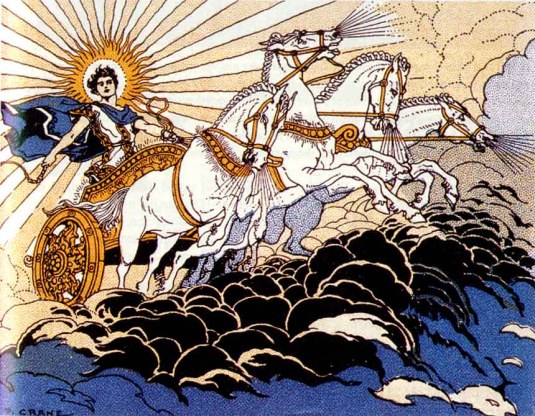
The good charioteer of Engineering comes to love this World through the employment of his own efforts – efforts which have brought the spiritual worlds into being through both the creative and the practical imaginative application now materialized. He brings permanency and steadfastness, practicality and cooperative effort into manifestation.


He is the worthy Prince, whose Father, the Divine Architect, is well pleased with.

Thursday, April 03, 2014

Chapter 8- Engineering: Exercise 2

Exercise 2
Touring the Cathedrals:


Venture into a Cathedral and mentally note if you feel any changes within your breathing, within your own body’s perimeters, in relation to the height of the ceilings, in relation to the turrets, columns and altar etc …


Walk slowly around each area permitted and find that place within yourself that resonates with where you are. Intuitively be guided to the space within the Cathedral that you best feel most comfortable at.


Should you have any particular regions of the body you desire to be healed, or reconditioned, go to that place within the Cathedral that speaks to you of that portion of your body … and pray there.

If you are mentally perplexed and hoping for some guidance which will speak to you, find which window makes you the happiest to be close to and in sight of, and pray there.

If comfort of sorrow is most sought after, appeal to the region of the altar and see if a power there does reach you, and pray there.


Repeat this exercise (where possible) for fourteen consecutive days.

Tuesday, April 01, 2014

Chapter 8- Engineering: Exercise 1

Exercise 1


Tools required:

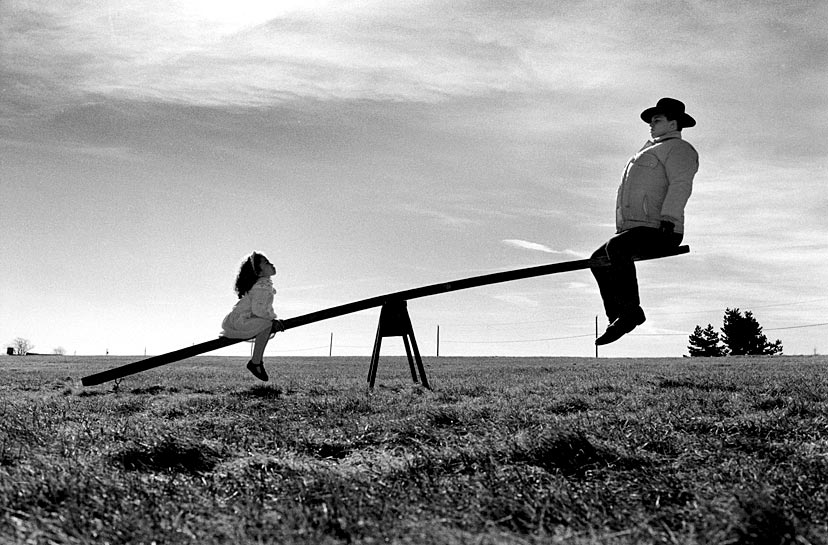
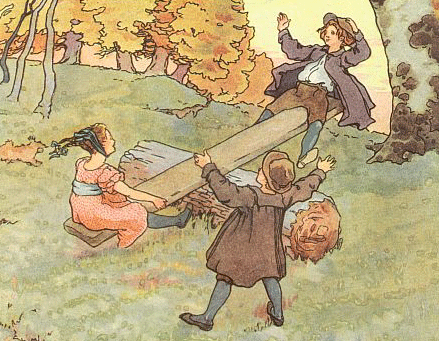
  • A see-saw
  • A playground partner
  • A ball


Perched on a see-saw throw the ball to your partner when you are suspended in the air and wish to come down – the ball will signal your partner’s release from the ground, as he elevates and you descend. Ask your partner of the same.


As an addition: Try to think of words (singly) that express great enthusiasm and joy – pronounce one of these words with meaning when discharging the ball.


Saturday, March 29, 2014

Chapter 8- Engineering: Recommended, Part 2

Cave exploring is a wonderful teacher of rudimentary engineering. When we are held within a form, such as within the naturally formed structure of a cave particularly, the outer peripheries speak inwardly to us. In other words we can sense the shape of this structure from the inside.

Architecture has long been known to inspire and provoke in this way; cathedrals offer perfect examples to this, with their ribbed-roof, chest-like, forms. Alike to giant men laying upon their backs, this chest cavity draws the man within to be standing (in this perspective) from the place of the heart. This in turn shall affect his prayer and his consciousness, as it takes into itself the overall shell of the cathedral’s beams and walls about him. 


Men naturally sense the walls around them. Added to this, they feel their form. Inorganic angular forms created by walls were meant to enhance the thinking, giving over to particular crystalline structures which were too sharp-edged and mean, (‘mean’ as in standard), whereas many sound halls are suitably developed to imitate the shape of the outer and inner ear.

Further to this it is said to be an easier death, were that one were to part this life outdoors! For without any enclosures surrounding the individual the subtle bodies slip readily into freedom, sensing less deterrence, confusion and persuasion … Conversely it is preferable therefore to nurse an ill person indoors and within a room which is best shaped to suit their healing. Babies respond healthily to being held in a swaddle, and cradled in a dome-shaped canopy.

Would that architects could pay more attention to the inside structures, than expending all of their creativity upon the outer! It is internally, not externally, that the buildings become significant.

And so when we venture into a cave, one which has been crafted by the spirits of time and the elementals of nature, we may come to the sense of the inherent beauty of perfect and particular form.

Making peace with relatives: These papers have largely been written for the care and consideration of the one who would read them. Primarily the objectives are designed to be of worthwhile appeal to the person themselves, for it is our conviction that a value discovered within one man does radiate out into the world and take its effect there too, if proven, if true.


This is an important qualification to make … one which could be misconstrued, yet is not intended to be. It is just to say that we expect the text to be viewed for self-profit, and that there is no shame in this, and no sense would that it were otherwise.

Self-profit cannot be gained at the expense of another’s owning. Karmicly it is not practicable. Ethics are taught to us in very simple demonstrations – and each in turn is brought to sympathies for others via such accountability along the way.

Yet, from our perspective, humanity underestimates its self-worth and potential, and has a difficulty in earnestly attempting to further itself in ways which do work well for them. There is much self degradation occurring in countless ways, needlessly. Eventually this will try even the patience of eternity!

It is true to say that if this text was written and read from only the humanitarian and self-less perspective the development of the reader would, in natural consequence, have to improve. The effects of good/healthy contemplations and deeds are (over time) more of the same. The process is enstrengthening overall. The path of the ascetic proved this, in that they could renounce the self and yet at the same time enhance their self into the bargain.

However this approach calls for a definitive self-consciousness which of itself decides the reasoning and weighs the goodness, for itself.

The theme of engineering is one of tangibility – of a goodness which has, by certain effort, materialised. Here we have an opportunity to firstly work upon ourselves, knowing that if done well the whole of the world will benefit. We test wisdom within our own reasoning and keep testing – ever watchful and observant of the results. In this way it is so very important that these texts are abandoned if they are not conducive to your own sensibilities. If they present as nonsense or cause irritation, it is vital that you may respect your own discernment here and go on to find something which does inspire or enthuse you. Do not regard these words because you believe you are supposed to, or in that they come recommended! There is no point, but for you, no point at all.

Similarly, when we suggest that it is recommended that one makes peace with their relatives, we ask firstly that it is done on behalf of your own self and for all that that means. Ideally you may try to please others, appease others or simply heal some past hurt for the sake of their situation. However, unless it is undertaken from yourself sincerely and with self-motivation it will not be ‘real’ and shall not count as it might.

Within our own personal orbits we are positioned greatly by the magnetic influences given out by our family members (whilst they are living). Unconsciously we are effected by this, regardless of how far away we may be from them. Whether or not we have a regular communication our relationship with our parents, our grandparents, our brothers and sisters, aunties and uncles and children of our own, all of these people in existence converge with us invisibly.

“How can this be fair and true, when I am so different from these people?” you might ask. And how often it happens, that each family member feels this difference from one another – the grandmother and grandfather, etc., all from their hearts crying the same in the quiet. Not one would feel the closeness imaginable in the context of likeness completely. Why then are we so different, and do know it?

Well, here one could say “well, yes we are all different of course, and yet the same as well, etc. etc.” which would be offering really no great illumination at all. Or … 
 
Relative to our foremost attractions to one another, we are brought together, compelled together, by such lively activity as is passing between us. Most lively activity comes of dissension, rather than congeniality. There are exceptions to this when there has been a creative and fiery relationship forged between two aspiring individuals, yet for the most part we are drawn into families because of past frictions – with person or with persona.

Nations who have warred against each other, especially those of neighboring regions, are often reborn into the other’s race immediately after the passing. You can imagine that the concentration given to this other race sets up the very attractive forces which take them into that experience further along. The soul craves experience and seeks it where it can. The ego of a man also wants for more and goes where the activity has past flourished. The people (or their context of living) flames as a beacon to the would-be incarnate. We are attracted into reactive forces, which may or may not be compatible to us; and more likely are not.

Yet when born, we do become attributed with particular racial characteristics and family characteristics now inherited and known to us which hitherto we were without. This is also an experience to be dealt with, as once again it is most likely that these new clothes of the personality are not natural to us in our own development.

There is the thought that some races prefer to repeatedly incarnate within the same body of men and do so without this change to which we refer. This has happened in the most recently ‘older’ races, where the egohood is still reflected in that racial consciousness, but at the same time the process described in the family mix does apply, and even felt more intensely, because there is the soul awareness which hurts when departures from the family thinking occurs.

Perhaps one fundamental problem lies in the expectation that family members should think and live similarly. Harmony is proved most wonderful amongst a collective of differing contributors; it is not so experienced amongst a pool of sameness. When family members try to prove their sameness as some kind of loving qualification amongst each other, it denies their inner life and who they are. It goes on then to cause much of a severance from one another because of the necessary lies within the reality trying to support and sustain the unreal – the unsustainable.

Regarding the differences of all - and the marked friction which has been ongoing and perhaps to be now resolved- (particularly if you do not want to be drawn together so intimately with these folk again) you can begin by a) accepting their inner and outer life as belonging uniquely to them - and not reflecting yourself in any way - and b) expecting them to do the same. In this way we ‘leave our family’ to become more of ourselves, but honor those members as well, as they should be – loved for who they are. This will bring peace. Even if it brings more friction at the outset, it will bring peace. For you have loved them all the more, and you are no longer trying to see yourself in images that do not match what you see inside.

Thursday, March 27, 2014

Chapter 8- Engineering: Recommended, Part 1

Activities Recommended:

  • Photography and photograph developing
  • Horse-riding
  • Food parcel packing for charity
  • Tours of caves
  • Effort to make peace with relatives
  • Homoeopathic remedy for ‘tiredness’ of min

Photography: Of the four elemental qualities, air, fire, water and earth, engineering predominantly features the condition of the ‘earth’ – of that fixedness examinable to the material existence.

In the photographic chronicles displaying this very fixedness we find that there is little or no quality of air (etherealness); no fire (life); no water (fluidity – ongoingness, mutability etc.).


The study of photography excites both the amateur and the professional in like regard with each new depiction. We are ever amazed at the virtue and the arrogance of this impressioning before us. If we are familiar with the subjects personally that have been isolated into that stationary moment, interestingly, we are immediately compelled to review our inner impressions alongside these eternal circumstances at the time we are recalling.

“How did it feel on that day?” will be the first question that springs from within. We shall mentally try to draw together much of what we can in a few moments to complete the ‘picture’ and add to its statement of existence.

Therefore this photo then becomes a springboard into more complex pictures held within our imaginative recall – the catalog of associations and deep memories which cannot of themselves, be comprehensively committed to a singular print.

As an activity we are asked to objectify the subjective experience and this is a useful example of contrast for the individual that has difficulty admitting the objective realities into his consciousness. This is not to say that the imaging in any given photograph is a wholesome or correct portrayal of a subject. However there is an inarguable element to it (providing it has not been altered from the original of course) – being witness to an aspect of a moment as it was at one time.

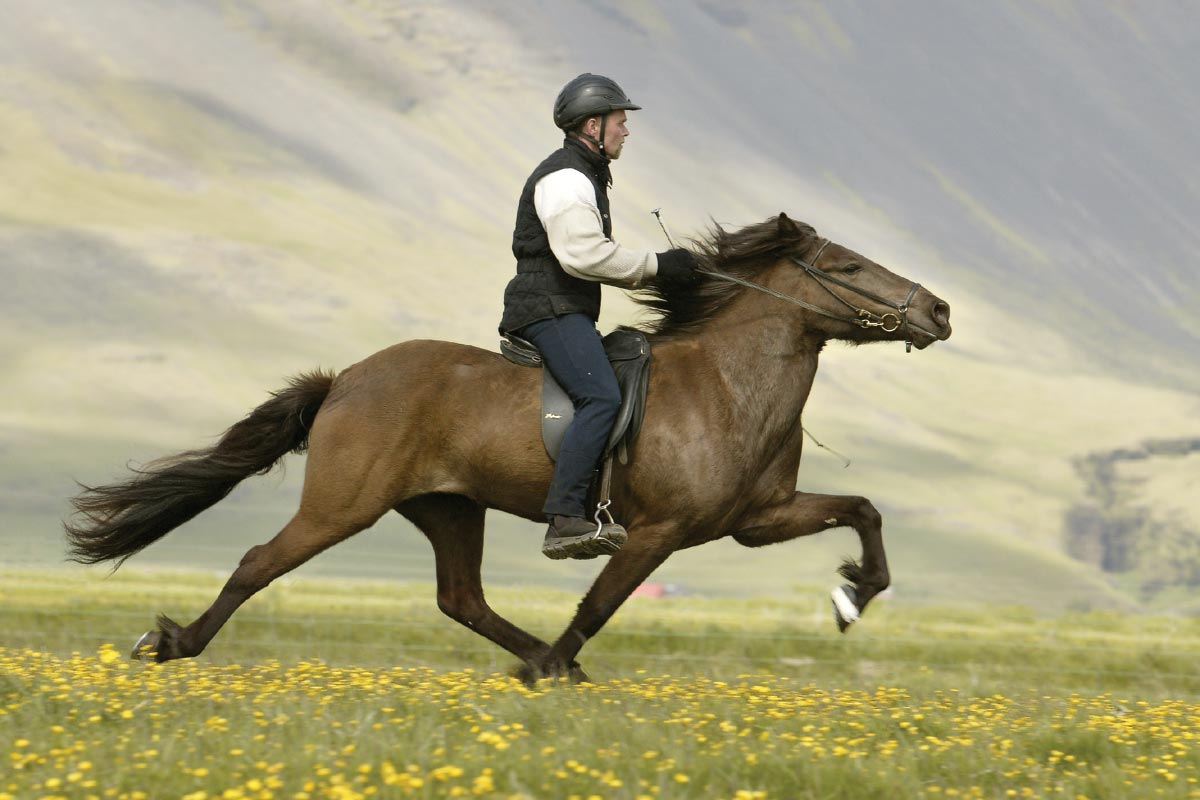
Horse-riding, once again, helps the rider to admit to certain immediate objective realities and also calls him to respond to them. There is a cooperation required between both man and big beast, and it is with this cooperative effort there comes a respect for the powerful animal, and a respect for the individual in common.

Dog training does not compare here, because one can impose their will all too easily upon a dog, so that the dog mimics the trainer, rather than independently interacts.

The learned responses from a dog can satisfy an individual in that the dog becomes much of an extension of himself and owners are known to equate their own self discipline with that of their adopted pet after a while. In this relationship the two almost become as one – the dog, being but the lesser model of the other.

However, with the horse and the dear donkey there may well be an amiable compliance, yet it is that it is the animal themselves deciding this congeniality – in riding, in cart pulling, in paddock tilling – the work horse, our gracious friend, deserves acknowledgment for that which he performs willingly. He does not have an ego developing as a man would have, but he does have the capacity to make decisions about his preferences and interactions. Such an animal as the horse would rather take sick and withdraw from life entirely than be forced to succumb to a master that is cruel and distempered.

Even those beloved of beasts who walk the grain stone-milling circuit – hour after hour – do so with a love for the human company around them. 


It is interesting to note that the more capable an animal is of deciding ‘yea’ or ‘neigh’ in that which it has its mind to, the more it can respond in loving kind to the people around it. A beast of the wild is too compelled by its carnal instincts to ‘decide’ its relationships accordingly, whilst the domesticated pet is too compelled by the will of the owner to ‘decide’ its mind in its present state of development.

We may learn to develop our choice making, our own ‘decisions’ as long as we are not treated like a dog and expected to perform to another’s will and bidding; or given to an aggressiveness which departs the conscious effort.

In taking this responsibility of choice – finding ourselves in relation to others and respecting the ‘I’ of the ‘am’ (of both us and of them) – then so more also do we become capable of loving as well. Only in freedom do we come to mutual cooperation and then further on to this love.

Kissing another person, mouth to mouth, and exposing each to the other’s breath as well as the fluids, is an extreme and deliberate test of tolerance and mutuality of egos. Having said that, we may all understand too readily that it is not by such kissing that we are enabled to meet with the bulk of humanity. In point of fact, as poignant a discovery as it may be, there are little or no folk we should wish to endeavor this ‘testing’ with comfortably. And so, one could say that even though the efficacy of this method is assured, it is not one in which we could share universally.

Such discriminatory processes can be over-keenly receptive and similar to us trying to appreciate the tuba’s playing with our ears held right up to the very opening. It is not to say that we do not share great and glorious affinities with those around us, but we do have perimeters to differences that co-exist amongst the splendid qualities shared that would speak too loudly at close range.

At the opposite to this ‘close range’ can be found the type of love and intimacy which is expressed to the fellow/s whom we do not ever even meet with. The type of charity as is expressed through the food parcel packing is one where we are not given the personal result or appreciation, and could not be further away from the other with which we are sharing a relationship.


The dynamic of this kindness of giving is swift and purposeful. There is nonetheless a true relationship between the charitable man and his receiver, even without the acknowledgment from either … and the parcel which is provided in this way, not only gives to the individual receiving, but the world as a whole as well.

Therefore, this is a different form of practicality we can come to in our understandings within the workings of the world, finding that the results of what we do, do not have to be realized by us for them to have a profound effect in many realms, in many ways. We can be both cautioned and encouraged in this. We can discover just how many ways we can enhance the physical conditions here anonymously and find satisfaction, most curiously.

Continued...

Wednesday, March 26, 2014

Chapter 8- Engineering: Contraindicated


Activities Contraindicated:

  • Linguistics
  • Commerce
  • Soulless sexual activity
  • Pseudo-intellectualism
  • Cooking meats, butchering & slaughtering
  • Suppressive drug taking (anti-depressives included)

For practical purposes, for the engineeringly deficient it is preferable that all manner of linguistical activity is avoided (save using a singular language). Whilst there are many benefits that come from incorporating more than one body of language into our refined thinking, there can be also more overwhelming aspects into the consciousness which interrupt the thinking processes because of them. 

All languages hold differing characteristics according to their time of origin and the prevailing thoughts experienced at that period. Every nation has offered the world their gifts and talents, and these qualities specific to each live on within their tools of expression. Much is incorporated into a living language and is carried from century to century, indicative of its parent-thought and parent-creations.

As was previously discussed, it is desirable for the engineeringly inept to begin with a singularity of purpose, rather than attempt to be conversant with many things at the one time. As language works powerfully in and around one’s thinking, it is best advised to feature just the one in discipline, than be libertine between two or more and vulnerable to the conflicting persuasions thereof.

Commerce is contraindicated because the nature of commercial activity itself contravenes good and effective engineering endeavours. It is not possible for a man to be involved in both with self-interest and succeed.

It is true to say that the Cathedral engineers were most ambitious in all that they set out to do and achieved, but their ambition had not to do with the transactional repercussions from that which they saw built.

Philosophically one could argue that structure is co-operative, as is transaction – and yet they are dissimilar and opposing influences in relation to their causative effects. The flows of finances and goods involves cyclical activity which is primarily fluidic when put to use. Commerce moves continually, economics itself is one heaving, breathing and regulating body which encompasses the transactions of worldly trade within … however, even with the necessary pauses at the completion of each conjunction, of each trade made, there is a follow-on consequence which flows through effecting other areas, and so on.

When it comes to the nature of engineering we are looking to a condition of fixedness, rather than flow. In order that we materialise any concept and keep it bound in actuality, its perpetual value shall be in the fixed condition, rather than in its fluidity. There is no transactional activity, as one would contradict and stress the other. Of course all good engineering makes allowances for some parameters of change (winds, sands, climates etc), but the strength of the project is in its permanence and structure, not in its plasticity or changeability.

Soulless sexual activity is a nonsense to the constitution and psyche of an individual. Although it may represent something which is stimulating and releasing, physically it is unsatisfying to the happinesses, whereby in turn, eventually causing much grief because of it. Were someone to feed you a food that appeared as a food – looked and smelt and tasted very good like a food – yet, in reality was but an inert starch, on some levels both your body and your consciousness would know it. After time the reality would prove itself, particularly if this is all one had to feed on.

Not one person can judge this consideration for another. Genuine mutuality and love shared with joy, considerateness and passion brings into the world those wonders which are beyond plans and singular visions in this true combining. A quality of the good engineer is to understand that which he cannot do on his own undertaking. Whereas the fellow bereft of this quality believes that he can manipulate forces and people into his will’s domain. He is unrealistic in his expectations and goes on to settle for the artificiality which he himself has then invited.

We are therefore cautioned when embarking upon those acts which involve a measure of selfless loving to be offered from ourselves in the deed, but conspire to take from them instead. 


Pseudo-intellectualism is but another instance of the artificiality prevailing over the man who would be king, but not bear the responsibilities of his sovereignty!


There is an opinion that suggests that a man’s low self-esteem will lead him into such bad behaviours as this front of cleverness for example, but we would say no, this is not the case. In this instance the weakness itself is born in false ego, in the assumption, not of much goodness within, but rather emphasising self-importance (and generally over others).

This kind of individual after death is often found ordering invisible servants to do his bidding – believing that he has an authority and power which clearly he has not. It isn’t so much a matter of feeling poorly and trying to compensate for the condition, because the compensation could and should be found in improvement were that this were genuine, or in featuring the talents one does have. It is moreover an inflated sense of self-importance which has no real workable substance or practicality underpinning it.


Cooking meats, butchering and slaughtering are best avoided as they involve a certain disintegration of life, exposure to bloods and an indifference to death.

Drugs which suppress the sympathetic and empathetic reasonings are dangerous to all, and particularly in relation to the poorly displaced in engineering, who are generally unresponsive to the conditions of others as it is. As you may have gathered thus far, this is a malady of subjective selfishness which naturally occurs in each man and woman to some degree, but is accentuated by its persistence in some who have not the ability to objectify accurately the perceivable truths in the world about them.

Unfortunately the use of such suppressive medications or alcohols will render the individual more hapless in this regard. Self-internment is painful. A healthy ego may be self-contained in its process, but in its action it is capable of stepping out from itself with great dexterity. The experience of being loving is both joyful and freeing because it releases the individual from this sense of self-internment and the internal stresses and concentrates are released also in the experience.

It is difficult for an individual to become considerate as to the needs of others if they have not the sympathies or empathies to alert them as they present. However, if the desire is there to develop for the sake of the folk around them, it can be achieved and acquired very rapidly. Selfishness is not a terminal personality fault! Neither is it something which the people around the selfish need to suffer from them to support any particular cause as if it is an indelible weakness. To suffer much selfish behaviour is often to encourage it. No man or woman is obliged to grin and bear the outright inconsiderateness of another and accept it as being purely ‘them’!

Medications remove the responsibility from the individual also in this regard. They suggest that he or she is not capable of working upon their own happiness and the happiness of others. We suggest (quite happily and with hope) that this is otherwise.

Saturday, March 22, 2014

Chapter 8- Engineering: Prayer

A Prayer for Good Engineering


To Master Gravity


& the Stonemason’s Plinth …


Beloved Order,


You who bring the workman his purpose and result,

You who define landscapes and invoke great machineries,

With intricate systems of Creation and then later created,

In design-given life, that by structure we perceive form …


You, of the great Temples, the very annexes to Heaven,

First ship, first town, first waterway with bridge as road …

With fibrous tenacity, and crystalline strength woven through- 

Be here with us and bless us with this most practical of knowing,


Amen