Translate

Wednesday, October 25, 2017

Chapter 12- The Therapies: Recommended, Part 2

The receiving of, and participation in the Eucharist: 

On the eve of that departing there were issues of merit to be lastly addressed and given answer to. There became a splendid assortment of moments in which our beloved Christ took one final pause before His Attention was thus driven into the calamity and depths of that death that was to follow. There was a very splendid time when He thought only of what was to prove best, that He could impart and make known, to help protect, to continue a living remembrance, and to welcome in further Life within His World. 

The ceremony of breaking the bread and drinking of the one cup was not newly given by Him; but that it was to be done for Him, was new. 

This ceremony done in His Name brings unto the gathered participants a very real connection with the community of folk who do likewise presently, and with those also who have done so before. There are means within the Eucharist which enable the cup before the celebrant to be of the one cup … the Graalus … the Holy Graalus. 
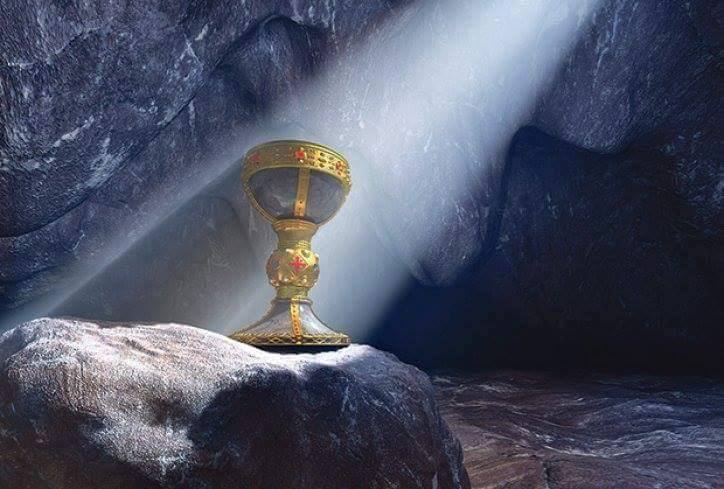

Spiritually, significantly, this grand chalice is that of the world. Can you picture our very Christ pouring into it? Can you feel the pores receiving? And, cosmically, as if viewing this globe from a distance … can you see this one glowing chalice as the souls make their peregrinations to and from the Heavens, drawn to it?

Every communion cup can bring our lips to the very Holy Grail so sought for – and does! Amongst this divine comedy of mysteries our most healing of therapies is there in that cup.
Adopting the gentle perspective is characterised by the ease which it promotes, whilst also the maturity for which it does prove. This is a significant passage amongst a chapter which decries ‘unripeness’ – for immaturity displayed within one’s temperament, thought or behaviour, is often too quick to act or to speak, too unripe in the judgement, too hurried for the proper course. This is, in a manner of speaking, problematic of unripeness.

The gentle perspective requires a little patience and a lot of ripening inner sun! That we may cure an idea within the warmth of our own being, that we may take time – even when seemingly no time affords. 

It is not an attitude of laziness, procrastination or ‘wait and see’ either; but what it is in its strength is an unprovokable sense of consideration where we can learn to go gently within the world and within ourselves – considerately. 

The viewing of the dawn can promote just such considerate patience. You cannot hurry the dawn yourself – it is obvious just what you have with an unripe dawn – you have but predawn gloom. If you hurry too much you can miss its occurrence in its most real sense – you can actually miss experiencing the arraignment of this paradise. The tension and anticipation, the melody, the mood, the airs … the expanding forthwith day.


For the unripe personality they will say “Oh, there will always be another dawn tomorrow I can see” … but for the mature they realise that not one is ever alike unto another. The unripe personality very rarely will catch this daily event. Yet the mature individual will take in many. The unripe individual will probably busy himself or chatter the moments away, whilst the mature nature might be held in great fulfilment within just a moment of a moment of its glory. 

We can actually work over our personalities during this morning episode for the better in this regard. The unripe individual who is determined to curb his immature aspects within his worldly and inner behaviors will benefit fantastically by learning to take in the morning’s awakening with peaceful and solemn consideration.


Chapter 12- The Therapies: Recommended

Activities Recommended: 

  • Self Appraisal (with Love)
  • The adornment of costume and/or jewellery
  • The receiving and participation of the Eucharist
  • Adopting the gentle perspective
  • The viewing of the dawn 
Self Appraisal along with praising the self is not only encouraging, but also self-determining. To qualify oneself cheerfully, to evaluate oneself optimistically, encourages also the angelic help which is all around us. The opinion we hold about ourselves does actually become reflected and experienced in the beings of those closest to us, who in turn see much of themselves incarnate in us.

For the angelic helpers often find themselves quite inseparable to us when it comes to a working consciousness. Their powers of affinity quickly begin this co-existent nature, and impels them to seek out identity amongst those of our own.

Devic spirits often mimic the folk around them, whilst the higher and more organized angeloi are transparently impressionable at times.

And so we can be mindful of this when we come to view even the lesser aspects of ourselves – not to forsake prudence of course – but however harsh we may be, may we be kindly.


If you are dissatisfied with yourself, you can still conduct both the assessment and the attempts at change, in a happy fashion. For to do this will be of the greater assistance, than for the dejected who dismiss their invisible helpers by the very attitude which promoted the complaint in the first place.
The adornment of costume and/or jewellery, the wearing of decorative hats, or any other accessories worn for beauty or fun brings us to that part of the nature expressed which is essentially playful, whilst at the same time attempting self-improvement.

Uniforms can be as sinister as they can be remoralising. When an individual chooses his adornment he becomes enhanced spiritually in the very way he imagines himself to be when he has first placed the article upon him. The very ‘glamour’ or statement that is assumed at the time of the choosing and the placing is that which emanates and radiates out from him (or her) in the surrounding ethers.

This becomes a personal creativity, which again will assist the overall spiritual psyche, whilst also give out a very real impression of how one wishes to be known by.

We can query the bed-dress as is given to the hospital patient. Some might argue that to strip them from familiar clothes and jewellery eases the patient from the concerns of the world, and even of beingness – and can be more restful because of it. Yet, if it is a positive recovery back into the world that we should mainly desire for them, it would be provocative to encourage their expression of themselves in the wearing of articles that best suit them and their hopes and ideas of who they should like to be and become.

Chapter 12- The Therapies: Contraindicated


Activities Contraindicated:
  • Bearing false witness
  • Entertaining the pessimisms: Gloomus & Doomus
  • The eating of Artichokes
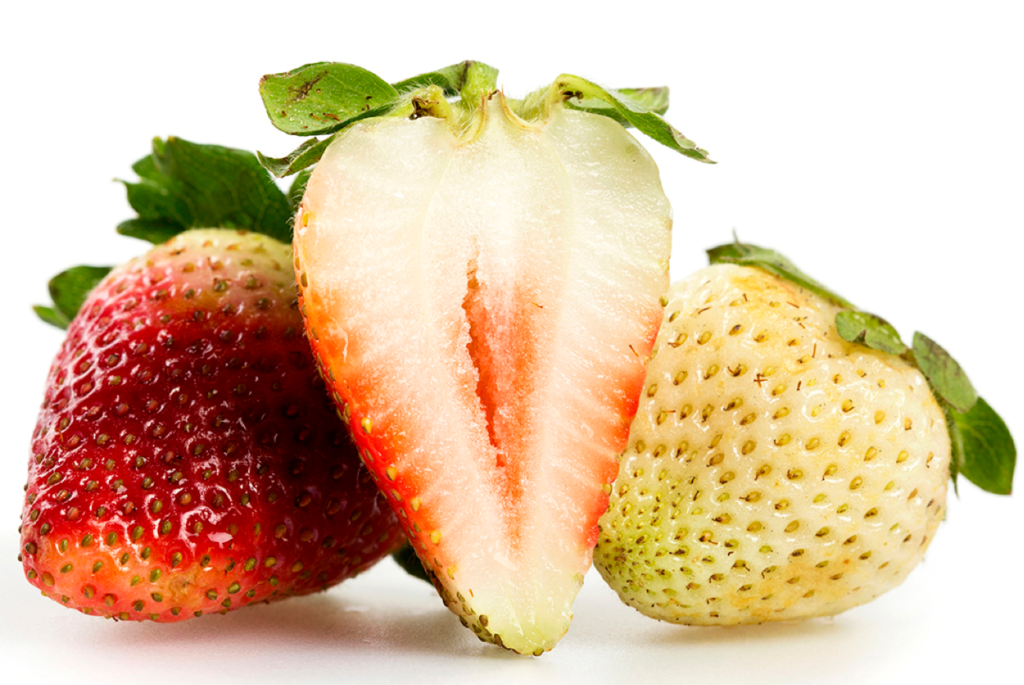
  • The eating of unripe fruit
  • Charcoal drawing

To bear false witness can, in actuality, have many applications. In relation to the Therapies it is a condition in which our observations are somewhat deluded; as are assumptions that follow, which become equally as misplaced in relation to what we truly know. 

Firstly we can honestly declare that experiences interpreted by ourselves are subjective, regardless of our attempts at fairmindedness. Even those who are lacking in imagination still see through the eyes of related experience. Our interpretations will be our interpretations, and therefore ‘delusion’ will always be arguable as far as that goes.
Yet what is not arguable or contestable by others exists within our own inner-speak – those things to which we truly subscribe to or know; and that part of us which is the ‘me’ amongst the ‘I’ and within the ‘we’.

Candidness is always preferable to compromise, when it comes to the dialogue of the self and in meeting the demands of others. Essentially we are but one person, and when we are inconsistent within our own consciousness the fragmentation becomes destructive and illness will surely follow. 

To negate or dismiss our innermost knowings and preferences negates also the rights and privileges of others as well. Whilst this may appear quite simple, and commonly said, it becomes a constant review in the life of the initiate when he must simultaneously weigh his own heart alongside the wishes of the world.

However, to compromise ourselves is to bear false witness to ourselves, because at the most fundamental level it comes from questioning our own self-worth and integrity, demeaning it by going against what is known to be correct and true (for yourself). 

When as children a strong-willed bully has goaded the group into snickering, meanness or even brutality, those children who weakly complied knew simultaneously that their own inner nature was becoming scored by this compromise, that in the very participation of something for which was not their own natural inclination, yet of another’s perhaps, they were bearing false witness upon themselves – turning upon themselves in that moment, as if to accuse that goodliness of being too timid, for example.

Much evility within the human nature is fostered by precisely such a process. Here in the Therapies we are studying the ‘coaxing’ of good influences, and in this portion we can take time also to consider the ‘goading’ which occurs amongst the more negative aspects impinging upon ourselves.

It is tricky to say the least. It can happen in the best of individuals. Quite often there is a goodness appealed to in this occurrence when men are made to feel less than they should be and thus begin to turn against themselves – to betray themselves – believing this to be an honorable path to improvement. 

NEVER desist from who you are. Never give way to a lesser opinion of your own goodness and correctness. NEVER falter into betrayal of one’s own selfhood. 

The negation of self is the greatest of sufferings to our Christ. When we bear false witness upon ourselves, we afflict Him in this also.

Therefore we recommend that a philosophy or learning which promotes self-development should only be adopted if it proceeds with kindness and respect for the student firstly. And, concurrently, a philosophy of therapy should likewise treasure such consideration. We do not know or even presume to know, for another. 

The assumption of Original Sin bore false witness upon all of Mankind, placing individuals into that intangible position of apology, denigrating the true worth and measure of our Lord’s Grace as it is active within this World in fact. Enter: Gloomus and Doomus! 

For what is pessimism if it is not firstly self-doubt? And, (and this is the really interesting part) both Lucifer and Satan thrive on it! (Gloomus – appropriate title to the ‘light-bearer’, Doomus – describes the predictability of Ahriman most adequately!) 


The eating of artichokes is contraindicated in relation to the Therapies as they are an unripe bud. When the maturation of a food has been halted we respond in likeness to that condition. The life which was to have been coaxed from the bud has been interrupted prematurely. This is contrary to the therapeutic reasonings.

Similarly the eating of unripe fruit suggests to our own organism of a certain defeat. The body will react by trying to evacuate the material as quickly as possible, and at times there will be tensions felt – either within the psyche itself, or it will be displayed in muscular spasm.

There are very definite expressions within physical development by which we are all marking time and working through to.


When a child consumes unripe fruit he shall similarly begin to hold back forces seeking developmental expression within him and can begin to fail his incarnating process. In an adult the development may have reached its maturation, however the daily commitment to reincarnate can become interrupted as well. 

All foods can be viewed as medicinal in relation to their action upon us. There becomes an added difficulty when one realises that that which is unripe may have an opposite effect upon the constitution to that which has ordinarily realised its own nature and seen through its expression to become fully developed through the advantages of the sunlight and the water that is required. 

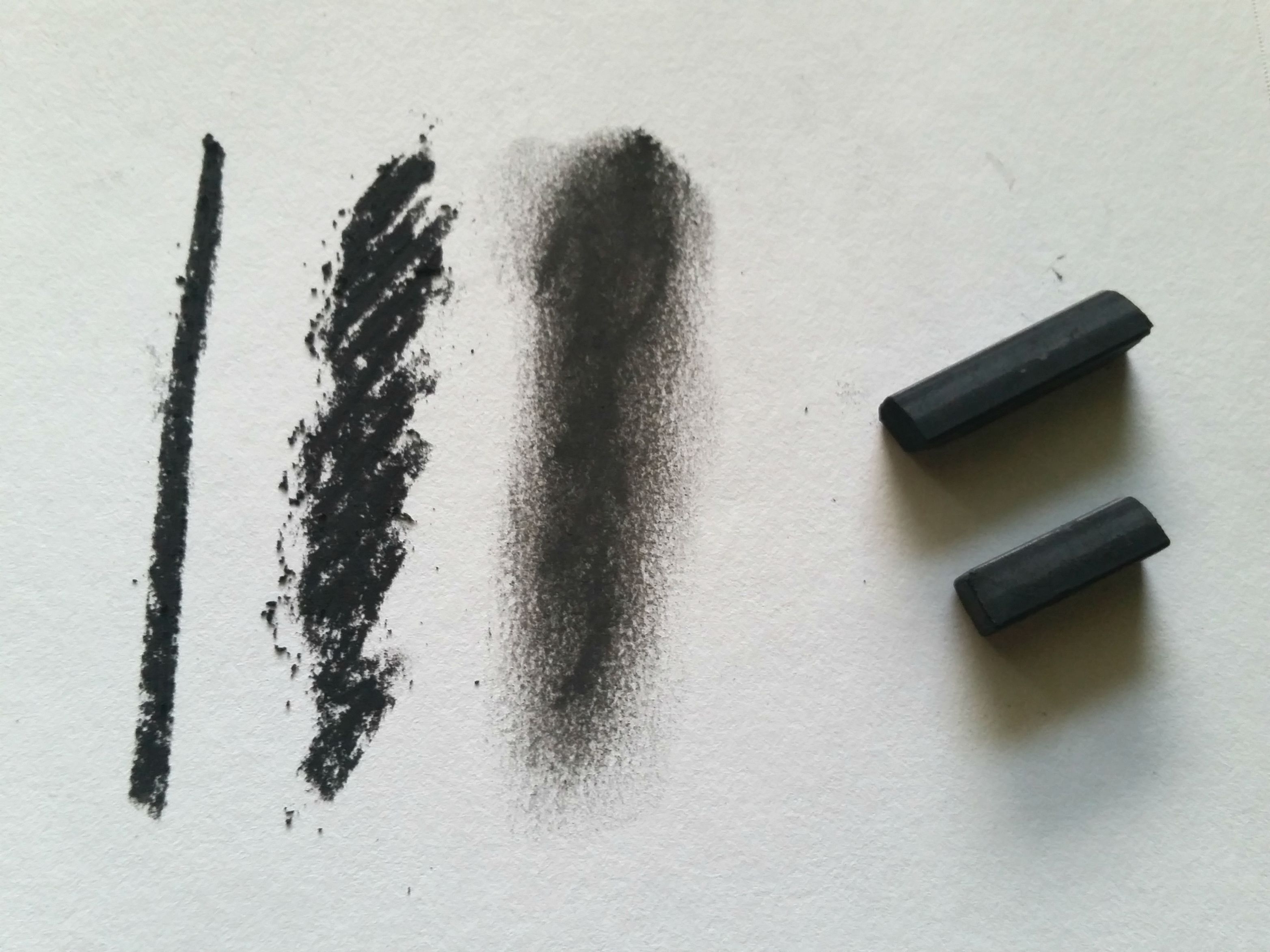
Charcoal drawing endeavors to combine an artistic experience with a dried, soulless, dead remnant. Whilst this could be said for the very paper also that we draw on, there are substances within the charcoal which are no longer representative of the former tree to which the matter belonged to. With paper we can trace its organic origins and find within its influence much of the forest from which it has come. In paper the parent qualities remain. And yet, with charcoal we are attempting to encapsulate a lively imagination through a corrupted vehicle testifying to death.


Chapter 12- The Therapies: Meditation


A Meditation 

The intermittent need for guide-dance,
The wise, Who then might this therapist be?
From whom Nature’s remedies
and techniques flow-
A flow without fee, a flee without woe. 

With each of same – well tried and true
If not in deed with self,
Then causal by some empathic glow
and insight learnt
from compassionate heed –
That beckons from
the sufferer’s needs. 
These two, are they then, so left alone?
To do no less than to resurrect
decaying life?…Why no!
Whether invited or not
the Heavens co-join and assist
at our appointed time,
Declaring henceforth our sanctified pact –
A sacred moment, a sacramental act
of healing Grace.

Chapter 12- The Therapies: Contemplation


A Contemplation 

Oh Child, you are hiding!
You are hiding
You are hiding
Oh Child you are hiding,
But I know you are there!

 In the face of the morning
And deep sleep of the evening
In all of my dreaming
I knew you were there.
The trees they do show me
Their leaves I can hear
Of that great breath around me
Heaving tides of the airs.
Oh Child, you are hiding!
You are hiding
You are hiding,
You are hiding
You are hiding!
But I know you are there! 


Chapter 12- The Therapies, Part 2


Part 2) Comparing drinks with solids

When an adult or an infant is debilitated through illness or malnutrition it is preferable to feed them with fluidic foods and their recovery will be all the greater for it.


Even an apple in its solid state can be more difficult for an ailing system to consume, when compared to that same apple either juiced or stewed or pureed. And much more so of course, becomes the differentiation when we examine meats and breads upon the organism.


In many respects there have been considerations as to whether or not men and women were ever destined to consume non-fluidic foods. Esoterically there is a great importance given to all substance which is fluidly mobile, for its proportion of ‘trapped vapours’ … its fluidic constitution remonstrates both life and congeniality proportioned to the bulk.

The soulic forces can only physically inhabit their substances in that which is fluidically responsive to them. When matter becomes consolidated the forces begin to draw back … and if no water is present within that substance they rescind entirely. (Water is the manifestation of the Heavenly Ego, which provides the perfect ‘body’ for all soulic forces intervening in the physical.)


It has been recognized that foods which are ‘predigested’ for the patient are easier to assimilate by them. By using the term ‘predigested’ this is referring to the processes of cooking and extraction. In this we may also understand that the original form of that bulk has been broken down and ‘relaxed’ out of its beingness somewhat. By the cooking or the extracting we have coaxed the nature out from the pith. A healthy metabolism may gain a certain strength from this process, however the constitution of an ailing individual is so taxed that the form intact of even an apple can present more difficulty within than merely with that of the chewing.
 

The actual combining of man and apple, for example, is truly occurring within the juices of both – starting at the saliva – and when a fluid presents the saliva begins combining well. Whereas when a solid sits in the mouth the forces within the saliva are worked accordingly to find the essences and vitality, and are spent there, whilst nutritive combining is held up.


If there are no fluidic/soulic essences to be found within the body of that which is being chewed, then the constitution is overwrought still trying to meet with them and find them. Sometimes, during this process (as with dried products consumed) other ‘natures’ can piggyback into the substance being eaten. For essentially these substances which are dried are quite dead – without etheric or soulic qualities now because their fluidic vehicle for such has long gone; and it is that sometimes at the gateway of such death, new life can attach itself therein. It is for this reason that we maintain that the opportunities for viral pirates (viruses) will be much more prevalent with the consuming of dried food. 


The presence of the water itself is remarkably important to the empowerment of the nature of the substance which is contained, whilst also the very mobility given to fluidity is another aspect which maintains and bears a signature of the life within. Physical movement without, commands the presence of that life within. There are many physical actions which invoke etheric and higher presence, and it is a cooperative law (if you could call it that) by which fluidity also invokes much life as well.

Perhaps this is not something that can be adequately explained in a handful of paragraphs here. But what can be interpreted and experienced by the reader are the differing effects substance and fluidic substance do have upon their own constitution, and that they may experiment and discover new findings in relation to that of their own health and wellbeing.


Thursday, October 19, 2017

Chapter 12- The Therapies


Chapter 12 

The Therapies 

Dietary Exercise Suggested:
  • Experimental beverages (non-alcoholic!)


Discovering the fun and enjoyment of a mixed juice punch, a fizzy or frothy concoction, a creamy warm or a tangy sharp cold one, an astringent vegetable extract or a cappuccino with chocolate dust or cinnamon. Milkshakes, herb teas, ginger beers, honeyed cordials. Mineral waters scented with fruits or floral extracts, clear soups and fortifying tonics.
The taking drinks for the pleasure of them.
Commentary:


Part 1) The enjoyment
The gifts brought to us from being able to smell, taste and acknowledge satisfaction are quite heavenly, rather than sensory, in their attributes. For it is in the spiritual worlds we can enjoy great pleasures of discovery similarly – simply for the sake of the enjoyment and experience itself.

This may be confusing for two reasons understandably. Firstly we are sometimes so given to a notion of ‘practicality’ that we regard the austere as being an essential quality of nature (and of Heaven) herself. And yet are not the sights and sounds of the natural world quite lavish and opulent throughout? In Father God’s Kingdom you may perceive everywhere His ‘added touch’ where beauty and frugality simply do not meet minds.

We have an economy of purpose that values the generous embellishments of both the fantastic and the wondrous. The sights and scenes of the physical world are not merely ‘purpose built’ at all! When we come to regard these added extras we are afforded, – those things which are not conditional or of necessity in the functional sense – we come to a higher necessity of heavenly consideration. We may not need love, humour, pleasure and desire – we could ‘operate’ and cooperate without any of them … and then again …could we?


So this is the first difference in which in the exercise above we are endeavouring to reclaim and experience. Enjoyment which is for itself and not for nutrition firstly (although by all means if you find pleasure in this it is very good also); but for the smell and the taste and the satisfaction that is known.
The second aspect to this dilemma is that of containing our negative assumptions. This is a very good practice for that. For example: there is a concept that we may purposefully sense a beverage or a food to examine its qualities and whether or not they may be a poison to us. In many ways (not only physical) it is true that we come to a substance and predetermine as best we can its properties before we continue to partake of them.

Now, there are many instinctual processes which have become confused within recent generations rather than assisted. Our discriminatory reasonings are often reliant upon an ingredients list upon a packet because much of the ‘food’ has been so far removed from its source and combined, that the usual means of empathetically testing the rotten from the fresh has been more complicated and also depressed.

We have spoken of the suspicion in which we are now given to in this and in this exercise we seek to go back to the beginning, to a more primal and less tedious nutritive force, and find the simple enjoyment. We do not suggest that this involves a nonsense such as sipping on a narcotic or a rat poison in denial of its properties; but rather though (within reason) coming to a beverage with the delight of a child and finding your most favourite and having the very best time in the experience.

(Once again and sadly, it would be inadvisable for a sufferer of diabetes to reach for the frothy chocolate laden with the marshmallow whip … but for those who can ‘indulge’ within safe dietary perimeters, we say “Go for it!”)

Saturday, October 14, 2017

Medicine: Weaknesses Transformed into Strengths

Characteristic Weaknesses Transformed into Strengths:

Virtues are natural to Man, and when desired, when called upon, when prayed for sincerely, deliberately and needfully induced, their messengers will beckon, and their characteristics shall be grafted to our being. The weakness shall be restored into that which it was originally destined to become, as follows: 

Man acting against himself, certainly champions him later against all other foes of his own humanity. Perhaps we gain insight best (even though it becomes a grave matter indeed to do so) of the world’s weaknesses, through those experienced within our selves (in part). For the man who has gone against himself and felt the injury because of it, he is later to be forewarned of influences which similarly would drive his demise. When redeemed – self-redeemed – he becomes all the stronger, and cautious, due to this learning.

The past and its associated demons may return to demand yet more and more of a man, insatiably – as the past is wont to do. The repetition involved is merely part and parcel of the nature of the Past, and the associated demons opportunistically will feed from any vitality spent in the halls of negative regression. When transformed, this indulgence may lend itself to that of a proper desistancy – knowing not of our abandoning our present-day egoic consciousness to past recollections obsessively, but rather taking a period of rest from that day-waking egoic consciousness into the realms of the Greater Will. 

Quite often a person will replay the past because it is a domain which they feel they can control. It is a set scene so to speak. Even the memory-recollections which are traumatic offer up a secondary safety in the retelling and in the constant outcome which is anticipated and reknown. However, the indulgence of these memories is diminutive to the consciousness which feels safely narrowed within this spent time. 

Occasional reminiscences are treasures to be respected, but the tendency to overwork the recall and dwell very much within it (to the point of obsession) confines the individual and thus limits them terribly. 

Once worked through we can come to the proper means to desistance, which is in the allowing of our most ancient of memories to call to us – from Father God. By giving over to Him we are making space for yet further and new beginnings within our daily lives – something which cannot occur if we are fully living within our egoic Christ-consciousness all of the time; and without rest either.

The Physician of Christ
Apportions time for the World,
And time for the Spiritual Worlds
With the divine realization
That both Father God and Christ
Are ever present in each concurrently.

Sunday, September 24, 2017

Chapter 11- Medicine: Exercise 3


Exercise 3

The Remedy

Tools required:

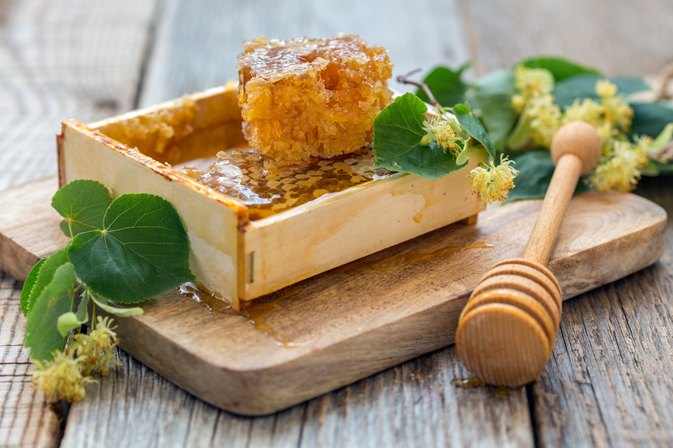
  • Some raw honey
  • Homoeopathic remedies as required


    Culture the remedy which best suits your needs within the honey and take a spoonful both upon rising and before sleeping daily.


Chapter 11- Medicine: Exercise 2


Exercise 2 

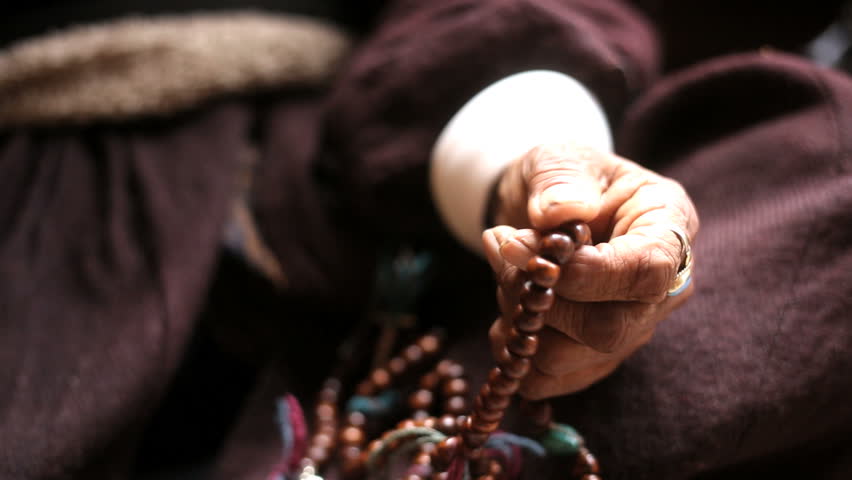
The Rosary

Tools required:

  •  Prayer Beads

Prayer:
Day –
I AM THROUGH HE, HIS WILL I BE
HIS STRENGTH NOW HOLDS
MY STRENGTH UNTOLD
NEW LIFE SHALL COME AND THUS UNFOLD


Night –
HERE REST I NOW, WITHIN THY HANDS
I GIVE ME BACK TO THEE
AND WILL IT ALL THAT THOU COMMANDS*
I AM OBEDIENTLY * 

[* Though the ring finger is listed as “Obedience” in the commentary on the Rosary, the little finger is one of “attitude rather than application”. So in fact both these fingers are of obedience- active and passive.] 

Whilst moving the beads through individual fingers per line, start with the first line on the index finger of the dominant hand (for most folk this is their right hand) finishing with the little finger. [Thumb is not included here.] The prayer for the dominant hand is the Day Prayer. 

Then, by working the fingers of the left hand, beginning once again with the index finger, recite a line at a time of the Night Prayer. 

Repeat this as many times as is comfortable.


Chapter 11- Medicine: Exercise 1


Exercise 1

Quoits

Tools required:
  • A post
  • Some rings to throw over 


Standing as close as it takes, throw every ring over the post.
Feel the exuberance that comes of there being the exact match. 


Tuesday, September 19, 2017

Chapter 11- Medicine: Meditation


Meditation 

It seems physical frailty
And character’s fault and flaw
Cannot be avoided at this time –
They are a given.

But tied to these
As water to thirst,
The future hope
That gives perseverance
Its present joy,
Is our dear Christ –
Needs driven.

However, He is me!
So driven, I too be –
Why driven?
Why not glide?
Is it because we are
Against a tide
That leaves need
An orphan
Much despised?

And need will ask
That we often test
The normal ways to care
Of Church, of State;
To see if sadly
They prove outworn
And keep us out
At ill’s very gate.

Liberty ordains
We fashion our new deeds
Of remedy and technique
According firstly
To our brother’s needs:
This is where
We will find Christ…
The place where He now leads. 

Thursday, September 14, 2017

Chapter 11- Medicine: Contraindicated, Part 2


Atheism, true atheism, is not as prevalent as people might suggest. It is one of the most incredibly difficult conceptualisations to indulge in, and invariably is the root cause of epilepsy (carrying over from a former life), barrenness and schizophrenia.

To a lesser extent the haughtiness of atheism can be found in the indulgences of Narcissism as well. Whilst the two modalities are from the same tree, Narcissism actively seeks out what is perceived to be a mirroring of self within the world and finds comfort (smug comfort) in all likeness. Eventually the appreciation of everything becomes diminished, as the acknowledgments narrow into very defined prejudice and over-sensitivity to the new.

Narcissism seeks self-affirmation in the outer world, trying to correlate the ego’s perspective from the viewpoint of the lower personality. Atheism on the other hand assumes the importance of the lower personality over the possibility of higher divinity and is apathetic to even seeking out any form of self-validation, correctly or incorrectly.


The dangers of narcissistic behaviour lie in respect to how subtly these tendencies can fester, promoting a self-serving artificiality to be sought in a) reality b) unreality and c) misplaced self-value and pride. It is far healthier that we rejoice in others and their differences and then go on to rejoice in that of our own, than rather choose to settle into easy company of agreement which substantiates, but does not further that of our own world and knowing.


Christ lives within the powers that are open-hearted and all-embracing. He does not ask us to entertain demons however, and it is understanding what is correct and what is not in perspective that is the all important lesson here. We have discussed two problematic causes of disharmony within these contraindications:

The difficulty of untoward influences diminishing our abilities, that we are too ‘open’ to projections outside of ourselves and to be wary of such.

Whilst also, we may be too ‘closed’ off from new and good influences. We may become locked down in our smaller sense of self without being able to incorporate new impulses and learnings and appreciations of the greater world and peoples about us.

Although these two appear to be opposites they both come from a condition that very much requires Christ to lead them from the darkness of a diminutive self. 

When we can no longer contrast ourselves with that which exists outside of ourselves we have difficulty. The condition of being too given to outside influences at the expense of who we are most naturally and healthily comes from lacking the strength required to do so. Eventually and through Christ, we shall be empowered more and more in this. And, not at the expense of sensitivity or clairvoyance either. Quite the opposite. The better condition for men is that they will consciously know of the influences around them and choose which they should live and become with, and those they should not.

With narcissism we cannot contrast ourselves with that which indicates perceptible difference either. We are sensing the pain of impingement before it occurs. Once again, through Christ shall we learn to discriminate that which heals from that which harms.

Chapter 11- Medicine: Contraindicated


Activities Contraindicated:


  • Spear fishing (and other such predatorial recreations – hunting, shooting, etc.)
  • Computer games or work
  • Atheistic indulgences
  • Narcissistic indulgences

Spear fishing as a hobby, rather than an absolute need, lies contrary to the very virtues the individual who is deficient in medicinal properties is attempting to draw into themselves.
Quite obviously in the first instance, the taking of any life dismisses our understandings of the very life within our own beings. However the difficulty with recreational killing is that it also incites many inharmonious pleasures in the practice as well.

To hunt and to capture has long been romanticized as a masculine heroism – perhaps relating to the days when skill could conquer over mass and ferocity. Whereas at present, when the mortal peril is rarely in question … when the hunted are but lesser creatures who pose no real contest to our ‘manlihood’ - then the chase is but a farce to the ego, which independently recognizes this discrepancy.


There are astral passions that are inflamed and excited by such activity. Holding a blood-drenched rabbit, with his ‘spirit’ having fled with his warmth, and his pulse (and his humor) all spent – what does the hunter experience when he acknowledges satisfaction in this strike? Moreover, what does it do to his own constitution in the process? … It denies it! It works against it and drives the indwelling ‘spirit’ out in disgust, by means of the disassociation which has just occurred.

Every action we participate in and entertain within our own thoughts and passions becomes mirrored within. Criticisms and hatreds score our processes and disrupt our functions. Life cannot remain where it is no longer invited.

Added to this we are also very much influenced by the company we keep and the indwelling thoughts and systems around us. Fortunately there are many perimeters which cordon us off from much which would impinge extraordinarily – and yet a little of everything still speaks to us daily and does so accumulatively.


The moral atmosphere surrounding a child is especially important in that their virginal astral sheaths are particularly impressionable to the invisible dialogues around them. It is often proven generationly just how much damage sadly can be done when the disruptive and sour tendencies from one can be thereby passed on. Weaknesses such as thievery can develop into congenital madnesses. The inordinate passion of the hunter as spoken of above, can cripple or disease the child that grows up with it. These are no small matters. Yes, we are all impressionable.

So, without paranoia, it is important to be guarded and well advised as to the morality and even-temperedness of the folk who presume to be in company with you or your children, for any lengthy period. Hysteria, agitation, cruelty – even chronic flippancy – becomes erosive to the constitution which bears its output through proximity.

Added to this now have also the computer systems which do not relate in any way to the organizational properties of organic Man. If one is ill or in deficit of the medicinal virtues, or wishing to cultivate further healing comprehensions to livingly dwell within their makeover so as to become a better practitioner or therapist, then it is advised to spend as little time as possible around computer systems. 

In general it can be said that computers themselves harvest many wonderful thoughts, processes and dialogues. They are not an artificial intelligence, but rather vehicles for a multitude of combined intelligences which stream and pool in many, many areas of influence – at the one time.

Oddly enough, (even though one can cite the electromagnetic demons and their kind) a computer when it is without its power is as impinging as one which is turned on. This is not speaking from the view of electrical impulse and radiation, but of a more subtle form of exposure we are given to, simply by being in the ‘company’ of this object of certain form and function.


You see, whether something is visibly animate or not, its movements which have formerly been, play out in the astral counterpart continuously and without rest. Whatever a person or an object has done – any change in its structure, output or momentum (and of course at the minutest of levels this occurs within all matter anyhow) - there is a repetitive replay of events of form occurring within the astrality of its space all of the time. And we are more than susceptible to these emanative mimes.

The problem with the computer (as wonderfully useful as it is) is that its functional properties are so very, very different to the workings of the physical body and what we are trying to develop therein. When a man is compared to a machine there could be nothing further from the truth ever said.

This is in itself a mystery, but suffice to say here that the working properties are contrary and not helpful to that of our own psyche or harmonious cooperative whole.

However, and having said that, there are times and conditions in which computerized systems have assisted in interim periods of physical need and worked with specific purpose to assist a hospitalized patient with some function for which they themselves could not implore. Whilst we are differentiating between that which is working countercurrent to the forces we should wish to indwell, we are in no way discouraging a man from the cooperative assistance of a dialysis machine for example and the tremendous benefit he can there depend upon.