Translate

Monday, August 28, 2017

Chapter 10- Language: Recommended


Activities Recommended:


  • Recitations
  • Musical verse
  • Prayer
  • Story listening
  • History
  • Diary (worded)
  • The practice of keeping an inner silence


Recitation is prepared and deliberate speech. It has been empowered in the practicing – in repetition and with intention - as the speaker works his words and concepts over and into his performance of deliverance.


There is a distinction however, between those words spent in ordinarily dialogue to those which are rehearsed. As there are to be found differing characteristics also with that which is sung, prayed or written.


The reason for these differing qualities is that the elements which they conform to also bring about their many attributes to word and to speaker; and these too can differ, once again, depending. We may call into our concepts and words the influences of the holy fire, the free-flowing waters, the heavenly ethers, or the earthy fixed element in our very method of experience and expression.


Musical verse (either words accompanied by music, or simply pronounced with a melodic inflection) encourages the word-beings themselves into a higher life! This phenomenal exchange works upon the individual as well. There is a lighter, brighter constitution afforded to each and every word-creature which is expelled amongst a happy harmonious unison of community cooperation.


In this respect it would be quite morally beneficial to incorporate singing amongst the programs for the criminally inclined. For here we have a process with which any man can begin to set about aiding other beings for their reform and upliftment, bringing about a causal joy and development to entities which are lesser than himself, and in turn going on to experience this within as well.

It is interesting to watch the effects: angered and ill-tempered people cannot convey such lower emotions during sweet singing. If the melody is good the man will be good also! We do not suggest here that it could be wise reform to put blasphemous words to beautiful music. However, it can be experienced that any dire phrase loses its dreadful content, whereas any other will be imbued with a higher happiness!

Prayer comes into three categories here:


  1. Prayer silently said
  2. Prayer pronounced out loud
  3. Prayer sung


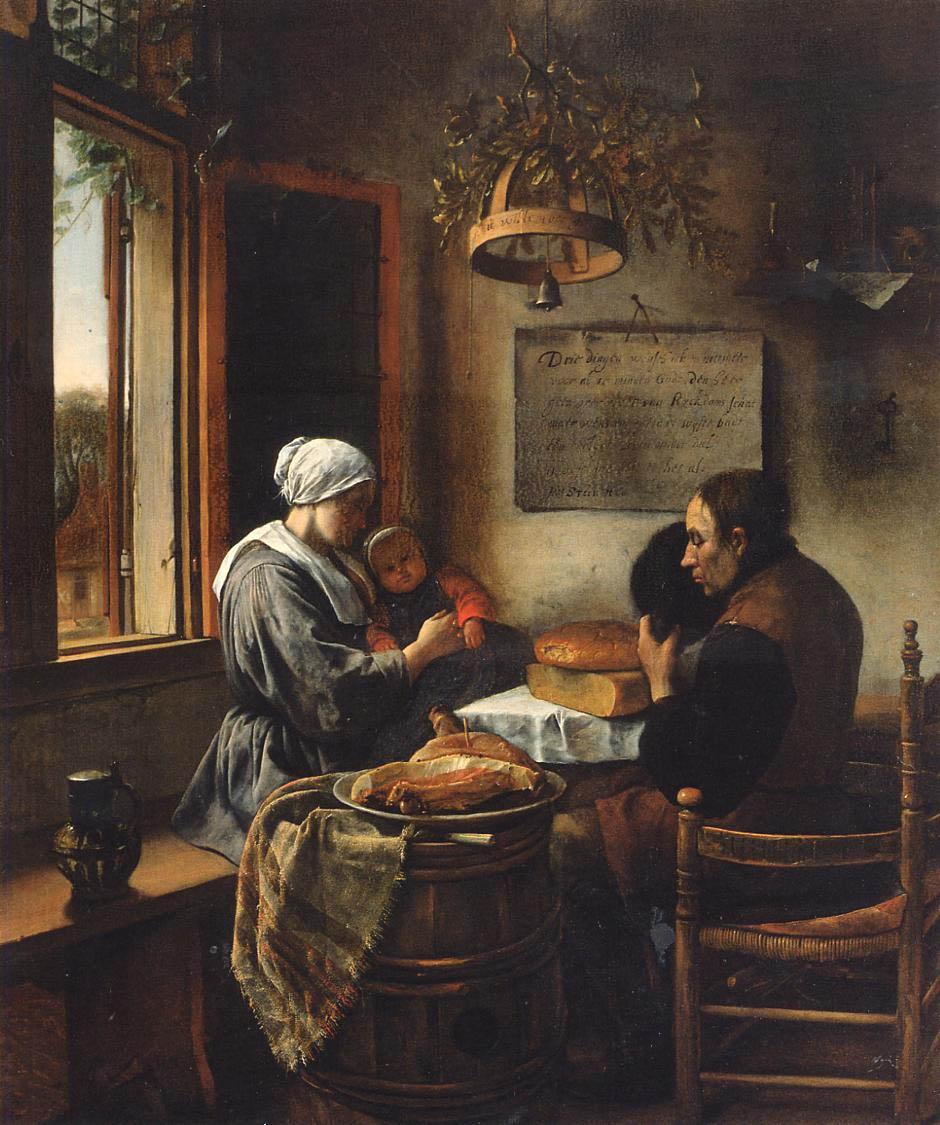
When we commune with Father God – straight passage from our heart to His – we do so without words, even though it may appear that they frame the initial calling. The words are left behind at the gateway of the heart and recovered within our consciousness upon the return journey into our day-to-day awareness.


We are free to go to Him at any time, and actually do refer to Him in many ways also which are not as deliberate or self-consciously chosen. Often when a man truly seeks inspiration or answer, it has come because he has gone to his heart (and beyond) for this inner reference. It is described at times as being that of the higher-self - supposing that you might call our dear Father God that, then well and good! But it is rather to be within the conduit confines of a selfhood (advanced or otherwise) that we can and do actually extend out much further, back on the fast track home so to speak, to our Father. 


Often during prayer you might feel that pause, that holy gap…. which no words can fill. You sense the fact that your yearnings have reached their destination and been acknowledged. The very comfort often comes in that communion with Him, and by His attention to this pain or inquiry, and then in the further knowing that from that moment onward things will change from what they were. We know soulfully that although the outer world may not be as responsive to this prayer as we should like, our inner healing has been defined by that very moment of ‘quietness’.

Yet, quite often it is the words of such appeal which do bring us to that quietness. What a lovely contrast again we find; where there is such a paradox of speak bringing us to the chamber of peace. It is the inner-speak, of unpronounced words that will do this.


For once we do say aloud such words, our action becomes one of ego and of affirmation. It is not something that is done to come to quietness, but rather a prayer for the beings of the world that they may also unite with the heavenly resources and respond well.


With prayers which are sung we find the further upliftment as described before, coupled with the appeal now delivered and heard by the higher beings. During silent prayer a higher being may be directed to assist you at a later point because that being is responsive to what should be done. But also, we can go directly to various lesser gods and Saints for their good influence upon us, as well as the angels, and they will best be petitioned through sung prayer. Such practice is to be met with through Christ, for all that is of this World, and of the other Worlds, comes to us through Him, for our protection and combining.
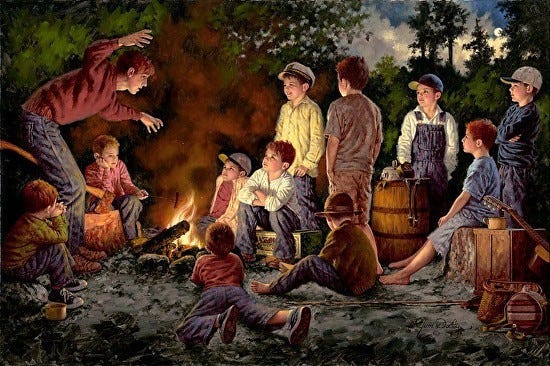


Story listening develops within us an artistic, rather than common, approach to our language. Usually every individual regards their speech to be fundamentally practical in everyday usage. Whether this is held to be true consciously or simply practised with practicality, it is the modern way of the world today, that we are given to a Protestant communication, one which has neither glamour nor beauty nor marked creativity influencing it.


This was not so only a little more than a century ago. In point of fact, this simplistic approach to language is a trend which has not been seen before amongst men. The ‘art’ of conversation – using wit, displaying high thoughts, poetic airs and so forth – the ‘art’ has had many traditions and muses which are now rapidly dying under the oppression of adequacy. This modern notion suggests that if something is adequate it will suffice and anything more than that is an embellishment. Historically though it was the ‘embellishments’ which were regarded as noteworthy, whilst the common or the merely adequate were not.

When we give ourselves to a good story we realise that there is no practical reasoning to be employed. For a while we may relax somewhat out of our functional mentalities and take to us a little of what we have formerly been a part of, and hopefully through such stories and poetry and imaginative works and wording we may revive something of what has been abandoned. 

Continued... 


Thursday, August 24, 2017

Chapter 10- Language: Contraindicated, Part 2

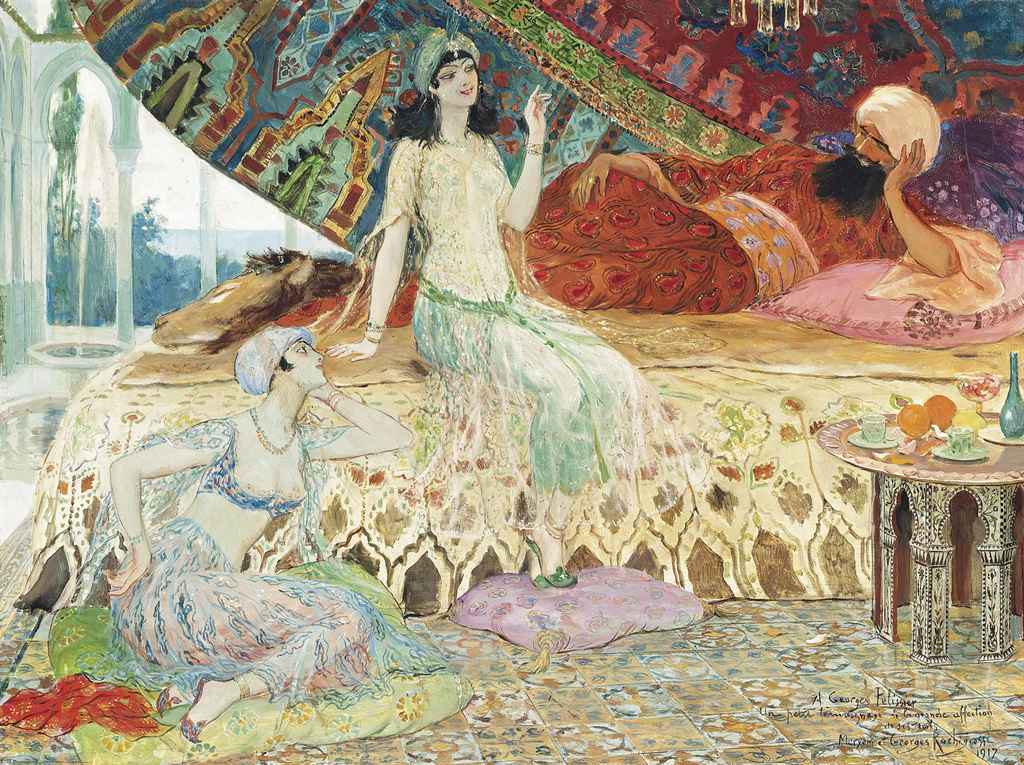
Painting, (alike to many other activities amongst themselves) argues with language contestedly – bickeringly.

Every art form (and for that matter, every activity) has a chief Muse, and many beings besides, which have become living representatives of that particular type of endeavour. Oddly enough and almost harmlessly, these beings war against each other in tribute to their individual causes. These spiritual battles have long been portrayed in many mythic depictions, and you may also find them in the planetary context as well.

And so, in a most complicated fashion, within an individual in his strivings to incorporate such as the twelve talents written of in this sequence, there shall be involved to some measure, a little of this warring as well!

On the ‘painting team’ we have an honourable grouping – just to name a few: the angels of light and of colour, the angels embodied in cloud and given over to the material fluids of all living creatures (including Man) within the world; the archetypical architects of future development; the elemental scores of the imaginings (of both god and Man); the creative devas; the luciferic cultures who portray their wisdoms through soul-impressions before egoic reasonings; and the beings of form within the physical world (not of co-operative substance, but of co-operative and collective form, who at this time are more given to inexact, yet creatively developing, expression.)

On the ‘language team’ we have the beings of music (who are as the ‘gods’ of the words). We also have their mathematical colleagues, the notations, and the actual sound-substance conveyors of both melody and melodic inflection; the beings of the intelligences of sequence in both the higher musics and the verbal pronouncements; gods of wisdom and their attending angelic dispatch; the emissaries of communication – of communing, combining and interacting (an element which transcends into the physics of every kingdom throughout manifestation); thought made actual i.e. a word makes a hidden thought become revealed and ‘visible’ to that which lies ‘outside’ of the thinker (the principle of us being the very thoughts of Christ made actual and perceivable through His Pronouncement of Us, just as He in turn, is the Word of Father God); the language entities who are as living links to their parent realities, and the language entities who tend to the fruits of the men and their muses.

Now it is also that from the occult point of view there have been teachers active in the world who have promoted one talent before another, and yet held an overall affiliation besides. Great souls have sought to combine the two and bring some harmony amongst the squabbling that exists within the ethers. In one sense this cannot be reconciled (because carrots will never be peas, nor want to be), yet in a productive, constructive sense, in relation to the twelve talents to be known and developed in Humanity particularly, great souls (by their example) can invite the powers to co-operate. 

This, of course, is in accordance with our dear Christ, who by His Presence and Organisation, His Wisdom and Belovedness to All, His Intelligence and His Forecasting and by His Love (being both relevant and complete) does He give cause to the harmonising of all ecologies and the homogeny within every system – starry, biological, corporeal, ethereal, mineral, elemental, primordial, rhythmical, (stratospherical) and with healthical!

Number-work: All number work – all figurative equations (whether they be projective or purely substantiative), all number work is numerology. 

On the face of it the system which number work conforms to may appear inarguably and unbiasedly beyond dispute or inference and devoid of creativity. Math is regarded as that one safe ultimate which according to its own laws defines itself et perpetua.

However, no one thing – not even a configurative sum – is so sterile that it departs itself from its organic origins and creative implications. The very bones of mathematical structure may be conformative and dependable, but they belong to a body which is far more universal and responsive in its application throughout cosmic life and being.

All systems are fathered by such divine order, which do ordinarily exceed their representative worth. What is meant by this is to say that fundamentally there is a principle throughout manifestation of the greater giving itself to the lesser, yet the lesser never surpassing its origins, or for that matter coming close to such great standards.

The very commonsense of this principle appeals to our reasoning – even though our lesser aspects may maintain otherwise at times!

To close this comment here simply, is to say that although the numbers and language do participate in the same ‘teams’ the entire transactive language of numbers belongs to a much greater god whose consciousness is one of Creation rather than of mere fixedness. This small paradox is made mention because there becomes an ironic contrast to language in its very application – for language seeks to contain, to encapsulate meaning. Definition and invocation depend upon a certain exactness which is everything we assume number work to be (and yet is not); yet it also belongs to a much higher order as well.

The reason why number work is contraindicated to language is that the realm of Mathematics belongs to Old Saturn, whilst our beings of Language have developed out from Old Sun, and the forces from one currently eclipse the other. In this respect it will be difficult to find a linguist which is competent in advanced number formula or a mathematician known for his skills as an orator. 

Insincerity chokes the vocal chords of the spirit as they say and inhibits the individual from ever realising that which is their own truth - an even more sorrowful a condition to the angels than that of the forgery it presents to others.

If a man cannot be himself, who can he be? And when he chooses not to be himself, he is merely in-sin-seer.

Chapter 10- Language: Contraindicated


Activities Contraindicated:


  • Mime or Charades
  • Silent Retreats
  • Arguing destructively
  • Painting
  • Number-work
  • Insincerity


Gesticulating without speech involves a process of forces which work directly in opposition to that of the word and language cultivation. When beings from the spiritual worlds communicate with folk within the material world, they do so by action, by mime and through signs, symbols and interpretations. They have not and do not employ the processes of language for their intimations.


When we are in receipt or correspondence with these beings (of the spiritual worlds, not with earthbound and world-related entities) it is with the process of charadery and mimicry that we would intuit the meanings and divine the messages there for us.


However, it is via the conduit of the ego itself that the phrasing and forming of sentenced verbiage begins: issued out from the self-conscious pronouncements that proclaim and make realities in their very passage. Language is the speak of the ‘I AM’… whereas mute communication is the ‘speak’ of the community soul. 


Of course, as human beings we can communicate using both talents concurrently. Many conversations achieve this, particularly though when the words have for some reason or another become redundant, and it is the communal soul-speak of gesture and tone which does ‘take over’ from the conversation – that of smile, gaze etc., becoming more noteworthy than the actual dialogue, contributing to the participants conceptually.


As with all of the contraindicated items mentioned in this manuscript, it should be said that we are mentioning this specifically in relation to the subject of this chapter. Gesticulative practice might be advisable when one wishes to incorporate the imaginative powers into something which would involve them, i.e. preparing for artistic endeavours. Yet, when it comes to language skills and the comprehension of the words we are using, it is far better to work word by word, and bring to ourselves the consciousness in that egoic process, than encourage the other through the forces of soul.


Silent Retreats have an advantage from the soulic point of view, inspiring through their absence of spoken egoic expression an exaggerated community environment. Yet and having appreciated the efficacy of this, we would regard a community which functioned with speech to be a triumph for Humanity much moreso because of what has been accomplished in the blessed combining and testing within.


It is by no mistake that the infant’s talents with speech grow alongside their very sense of self, and self being differentiated amongst the community outside of them.


Capable speakers can be perceived to have a ‘presence’, and this presence is that of their own egos being experienced by both themselves and the listener. For the eloquent and the intelligent toastmaster there is a degree of development in their selfhood which is most evident. Likewise it can also be perceived through the quality of the linguistics of another as to whether or not there is a weakness in that individual identifying themselves as distinct from all others.


And so, what is to be deducted from these suggestions is that for a person to learn his words, and to work on his speaking, he will in turn go on to develop a very strong and healthy sense of self because of it. (Add to this the ‘confidence’ gained as explained under the heading of Grace.)


A community which does not encourage speech from each and every member, but rather requests and enforces silent periods of suppressive directives, is mollifying/pacifying its people. This is true, but at the expense of a much greater spirituality or corporate spirit, were the opportunities for such rather appreciated.


Further to this, it has been said, so correctly, so often, that what you don’t use you lose, and in regards to our relationships with the very beings of words, and our own sense of identity amongst them, it is sadly the case, that should we prefer to remain silent and not speak out of ourselves, we may lose our very sense of selves because of it. (Note: this does not mean to suggest that one must speak excessively, out of turn, or of nonsense, but relates to pertinent and intelligent communication of self connecting and combining with pertinent and intelligent others.)


Destructive argument is very much enjoyed by the demonic community about us. All kinds of gremlins become enlivened and spitting, quite excitable with all of the effluence which pours from most people during a disparaging and aggressive debate.


The main problem here, from the esoteric viewpoint, is that the meaner natures of these demons are literally fed and watered by our misdemeaning behaviour. Certainly our angelic benefactors know no joy from our seething corruptions of hate or of anger, and in consequence our vitality becomes eroded and the abuse becomes disease.


It is healthy for a developing ego to discriminate that which it does and does not want to be a part of. It is reasonably healthy also for temporary disturbances to be acknowledged within the individual, in that he or she will have to experience unpleasantness within and without from time to time. The question then is how to avoid the suffering of or the manufacture of destructive argument when it does present to us. By what means can we know when the debate has turned ‘dirty’ and hurtful?


Firstly, love never qualifies anyone to behave badly. In other words, it is no excuse for us to ever suggest that because as a parent or a friend we may ‘love’ someone we have license to verbally abuse them. Such acts of aggression are treacherous to the relationship because they are injurious to the subtle bodies of our beloved.


When we share egoic-keys with another, and have taken them to ourselves so to speak, we are vulnerable to their opinions, and quite ‘open’ to their criticism, in ways that folk who are unknown to us, do not have the same effect with. This is not just in the psychological sense, nor the subconscious sensitivies, but also and markedly within our subtle makeover as well. One can imagine that if a plant’s growing is altered depending upon whether or not we speak pleasantly or disruptively to it, the same certainly follows for the constitution of a man; and to a far greater degree.


Therefore, at all times may we refuse to partake in disparaging conversation. To never belittle ourselves or another, to never speak with contempt, malice or aggressive persuasion, to not indulge in tirade, unkind criticism, ill-temperedness or insult, but to remember that which we speak of we become. For in this the ego manufactures its own magic and manifests that which it pronounces. It is therefore prudent to be cautious with our words and the manner in which we use them!


Continued... 


Monday, August 21, 2017

Chapter 10- Language: Prayer


A Prayer for Verbosity

Arcana

Sonabilis

Et Litera

Resolutus

En Scriptor

En Codex

Illumino

Eluvio

Sol Mundi

Sui Christos

Praescriptio


We are

In Him

All

HOMILIES.


[Translation:


The secret

of sound,

And letter,

Resolved:


Behold the Author!

Behold the book!


Illuminating,

Inundating,

Sun of the World,

Christ Himself,

Writes before all.


We are

In Him

All Homilies.]


Chapter 10- Language

 Chapter 10

Language


Dietary Exercise Suggested:


Grace & ‘Grape’


This is a two-part exercise.


The first part concerns the expression of formal Grace to be spoken over the meal using the deliberate combining of words, prayer and substance.


The second part relates to the experience of naming the foods just before delivering them to the mouth, making a deliberate and conscious exercise of identifying the substance, speaking its name and then decisively eating it.


Commentary: Grace


To name something is to address that something. By naming intentionally, we are approaching and calling for its attention. To name someone or something with respect, we are challenging the opportunity to meet and to be, for a time, with that which we are calling to.


It is interesting to see just how beneficial the action of a spoken Grace can be amongst the people; in action not only within the assimilative processes of the food thereafter, but in the context that a prayer is said in that very ‘open’ context before we are about to receive into ourselves that life-sustaining nourishment, and how communally we can be bonded by that prayer exampled in that food.


Further to this, we may bear in mind that all Grace said becomes a Communion in celebration to Christ. It is yet another form (and special indeed) of that blessed sacrament.

So, in this naming of the mealtime Grace we may call forth, in gratitude, ourselves, our food, and the spirit and the life which is in both. Added to this we crave that Christ be present amongst us in this substance we are to ingest, and in that substance within ourselves, ever present, that by a typical analysis the contents would read: Him, they and I.


Pertinent to our understanding of language the speaking of the Grace is most benefactory. Would that it was the first application given out by the speech therapist! For incredibly we do ‘eat our words’ over a meal table … and in this one is reminded to be cautious just as to what one does say (and how it is expressed) because the subject matter and emotion is absorbed as well, either becoming useful to us or as a poison, depending.


The second part to this exercise requires that we name each piece of food just before it enters the mouth!

“Celery!” bite,

“Bread!” bite,

“Milk!” gulp, gulp… and so forth.

If someone addresses us by name during a conversation we are awakened by its mention; brought forth and more enlivened. When we are the ones to say the name, we too are more intentional in our interaction to follow, and enlivened by the presence there before us.

In the naming of Christ this is a powerful reality. In the naming of Father God, it is and it isn’t, because the true name of Father God is never used (though known within). Historically there have been names given to this Name but none which are an accurate pronouncement of ‘The Unutterable’.


Yet, in part, all names are of Him, and it is to this that we chiefly address either in substance or being.

It is with this divine respect that we make our approach unto another; whoever. For it is the life of our Father, as it is with us, that stirs within and radiates without.

A wonderful confidence comes because the individual is connecting strongly with the reality of the present and begins to know it all the more. It therefore has a dual purpose in this exercise in that we become more accurate and conversant, whilst also more conscious and confident in the moment as well.

The beings of Language crave accuracy and sincerity. Sincerity and honesty are not dissimilar, but also are not of the same. Although there will be many passages where it is explained that dishonesty is devastating to ourselves, it is the insincerity within the dishonesty that effectively does the damage.

During any respective exercise we are able to rework patterns which have otherwise formed within us. These rhythmic behaviors translate into many differing levels of our being. The food exercise as described starts at the beginning once again, reinventing an accurate connection with our words and our immediate circumstances. This in turn should follow through to our overall linguistic ability as well as our confidence in the world.

Wednesday, August 16, 2017

Horticulture: Weaknesses Transformed into Strengths


Characteristic weaknesses transformed into Strengths:

Virtues are natural to Man, and when desired, when called upon, when prayed for sincerely, deliberately and needfully induced, their messengers will beckon and their characteristics shall be grafted to our being. The weakness shall be restored into that which it was originally destined to become, as follows:

Dispassionate apathy often arises when the forces of nature one usually feels within have gone running out over the hills, leaving you far behind! It is not that the soul-consciousness lacks the eagerness or the nativity to commiserate the ways of life with glee and welcome such as they did in their childhood. It is largely a matter of that part of their nature being so excitedly untamed that it cannot find qualification in what appears to be mundane or taken for granted.

Life never strays far from its source, as they say, and when the forces return, as they will, the individual is given to such an exuberance as is never quite felt before! And it can be for the ‘strangest’ of things; as far as everyone else is concerned! 


The contrasting virtue to this condition is one of invested interest whereby the once dispassioned are yet seized with a well-earned fervor and new life once again, which will come of itself, most naturally.

Ungratefulness is treacherous, and is the second-worst offence next to blasphemy. It is a condition of the ego whereby the individual has accepted something for which they have failed to recognize the element of Grace in.

NOT one gift we are given is due to us. There is nothing demandable of Father God, nor unthankable from another who has benefited us to some measure. 


For all that we may believe we are owed, we shall always dishonour the true value of that which we have if we actually believe it is ours for the taking. All things which we enjoy – even that which has come through our labors, more importantly – is with us because of Grace firstly, lastly and in between.

When this is truly perceived by the soul and its egoic consciousness it becomes a virtue of Charity, when thus knowing that in the blessed state of receiving we depend on Grace for every day unto eternity. This knowing is blissful and eventful, and when fully realised it infills the ego with true prosperity – understanding that life itself is given, but not a given.

Desolateness is primarily a physical dilemma, one which folk often use the sweeter of foods to try to correct. When this weakness has been won over, it becomes Goodwill as the joviality of Nature is once again inherently known, experienced and realized. 

The Ambassador for Nature stands at that conjunction where the stars assemble their goodness and this planet’s children reply. He bows before the majesty of Grace, bringing before her both Reverence and Completion, accepting her bestowments with the honour and the privilege they endow. He distributes his gifts as they are given, pledging to further her work in kind both in and out of manifestation – in the blessed always.


Chapter 9- Horticulture: Exercise 2


Exercise 2


Tools required:

  • Miniature oil can (with oil)
  • Bag of nuts, or alternatively, salted popcorn
  • Flowers, hand-picked preferably


Week 1: 
Taking a miniature oil can suitable for the task, apply oil to hinges which squeak or resist movement stubbornly. These can be hinges of doors or of cupboards, or be complaining fittings on metal chairs for example. Fixtures on windows, sticking keyholes [powdered graphite might be better here] – screaming screen doors. Take the oil can with you throughout the week and offer this service in every house and building you enter into.


Week 2: 
Taking the one bag of nuts (or of popcorn) (or chocolates if preferred) everywhere you go, offer one piece to everyone you come in contact with – for the entire week. When the bag becomes diminished refill it again, though making sure that everyone takes from the same bag the entire time.


Week 3: 
Give to each person that you see and speak with a single flower – for an entire week.

Chapter 9- Horticulture: Exercise 1


Exercise 1

Tools required:

  • A small handful of coins
  • A small handful of seeds
  • Suitable garden
  • Watering can

Plant the seeds, along with the coins and water them. See how the garden fares.

Note: The monetary value need not be much, but should be current. It is offered as a respective token to the Devas of the garden – not because they in any way understand or deal in currency, but that they perceive that we do and are thus enchanted and well-pleased by the offering. 


Tuesday, August 15, 2017

Chapter 9- Horticulture: Recommended, Part 2


Sweets inspire the imaginative forces in Man. They help to release certain thought, and to relieve an individual of his sense of self and the very boundaries of self. Although, too much sweet eating will bring the possibilities of one being either a happy fat clairvoyant, or conversely, just overly crazily quite flippant!

However, that having been said, the imaginative forces are not as strong or as active in many respects as they have been in the past, and yet what is becoming matured now through the ego of individuals is stronger and more capable all up. We actually require more imaginative powers of comprehension for example, to negotiate ourselves within a firmly material world. If our perceptions bring us easily into the adjoining spheres we do not need to work the imaginative powers in ways that we do when we utilize them to bring us into those realms intuitively.

By ‘imagination’ we do not mean to speak of nonsense, or to convey the perceiving of that which is not there. It is not something of illusion, even though such imaginations can invoke a previously unforseen creativity – no, the imaginations are the very arrowic forces within the mind that can project further than the reasoning itself can permit.

In this way the imaginative forces can be either unproductive or very useful; depending upon the reasoning itself for which they are governed by and directed from. All men and women depend upon a measure of intuitive reckoning - or pneu-instinct - of unspoken communications amongst each other; of the very imagining of themselves to be more than they are in order for them to become that person that they would work for.


Noise-making is audibly and etherically arrowic. When I blow a whistle, ring a bell, sing through a flute, I am projecting forth, out from myself, an audible arrow that I can comprehend.

Music (muse-ic) is as a grace, relative to the planes for which it co-operates upon concurrently. For it was out from intelligent sound that creation became itself by – sound being the prime vehicular containment to the passions and imaginations of the gods themselves.

Sounds also give our words their passage – even the remembered sounds as spoken in our mind’s own language, even these do remonstrate upon the ethers. And, with either melody or slur, the notes of both song and of vernacular create spiritual life – as we spoke before of the ‘fruits’ as borne out in the thoughts of men, their aspirations and their works of imagination. For you see it is the sound which fundamentally gives flesh to the frame of inspiration.

That which we see, both here and in the spiritual vistas that unfold before us, settles before our perception in a tangle of community. Our visual nature is advanced to us via the interpretive introductions of other beings. There are, in many respects, intermediaries which assist in the communication between the sighted and the seen – intermediaries without whom which we could not manage any connection at all.

Although we share a certain commonality amongst the beings of our associate kingdoms – in nature, and in supernature – we do not have the keys of such similar likeness as to even be able to come to perception, were it not for the intermediaries taking part in this transaction.

Even ‘sight’ can be invasive, if not carefully prepared for, if not prudently ventured into – and it requires a permission of sorts to be granted from each individual entity before they may be consulted in the visual context. Every tree and every cloud is examinable by us only in part, and only in agreement with that being’s presentation of itself; and when a clairvoyant perceives visually more than what is usually required, he does this chiefly because of his intercessors and their negotiations on behalf of him.

However, sound is the universal language – the “HTML” if you like, of the Kosmic and bio-cosmic spheres. It is neither negotiated or conformed, but rather is what it is, both plain and mysterious, actual and impliant, coaxial and immediate in both the giving and the perceiving.


When we consciously expel a resonant note from a bell or a whistle or an instrument, we can become more aware of the nature of sound itself as it works amongst all of the life which does live by it.

The sounds we emit out from our own being are not distinguishable by ourselves in the way that the use of a separate instrument can be discriminated. It is as though we truly never can hear ourselves, and when on that small occasion we might briefly catch some audible passage we will fail to take in the impressions as they were in actuality.

For sound is not egoic by nature, but rather most angelic in its faithfulness to reproduction, exactness and purity as a vessel to creativity’s directing. It is not capable of knowing itself, and that part of us which becomes in sound is not capable of perceiving itself separate to us, either. Radiation dismembers and fragments sound within the organic host. Yet even among a cacophony then caused, the sound cannot recognise itself.


Aromatherapies can bring to us the soul of a garden which has long departed this world. The etheric vapours as expired and captured into the fluids bring with them not only the sun and the wind and the fragrances of the petalled face and the bulbous head. They bring not only the parent plant which has dwelt in the greenhouse of paradise since World’s beginning. They sing not only of the deva and his ancient summer’s daydreams. They whisper not only of the gentle rains and the rich mother soil, of a world briefly known in experience bright and bold. They tell to us, by way of their scent, whether pungent or sweet, sharp or naïve – they tell us of gods.

And, of when the gods smile upon our humanity, for paradise is their tribute to Christ …and the fruits and the flowers are their gift to His Life, as is here.

And, it is because they are of these old gods, it is this portion of paradise which has been unaffected, unafflicted by ‘the Fall’. The flowers are preserved in a timeless grace; partitioned on both sides in lovely expression.

Yet remember also, that there are many gods, and here and there, (once again alike to that most famous of christenings) now and then a ‘bad’ fairy, or a misrepresentation has found its way into the garden – but not in the beloved form of flower or of fruit, but in poison and in hoary, spiky, unwholesome growth.

The beauty and the mystery which is the rose is that one god has entered into the plant, despite another: a malevolent force being countered by Christ Himself who has now made this flower His own - and, springing out from the thorns, redeeming its evility, it buds into an opening glory. Herein is the mystery of that plant – the struggle in the one body, when He ‘a-rose’ above that horny demon who entered the garden like a sullen and objectionable weed and whose body was to be later crowned King of the Garden.

Instead of the thorn shall come up the fir tree, and instead of the briar shall come up the myrtle tree: and it shall be to the LORD for a name, for an everlasting sign that shall not be cut off.
 - Isaiah 55:13