Translate

Tuesday, February 27, 2018

Chapter 14- Reaching for the Stars, Part 2


Although we take the future for granted, even that which is predictable, it is perhaps the largest of errs to believe it to be so. Whilst there is cyclic repetition, there is also a law which commands certain change. Remarkably, although we are served well by our trust in particular eventualities, it is a wisdom also to work all beginnings, understanding what it is that we do not really know.

This is the two-edged truth of Reaching for the Stars …to hold to a hope in certain, eventually worth investing ourselves in, whilst trying to bravely perceive that we can never be guaranteed of anything. If we can properly grasp the latter, we become less prone to false hope which promises everything, but effects nothing.


The question then becomes: how do we recognise a false hope from a real one? A false science from the true? Scripturally, the answer is: “From their fruits you shall know them”.

Providing that eternity continues we have much, much time to test the futures within. Throughout given failures we will endure. For those who do invest and work for the best of ideals, they will engrave their longings in happenstance, they will realise their imaginings by the very effort put in, in the trying.

For this is how we are spiritually creative – we begin with the fumblings and the means to answer our desires are worked out and shown to us exactly how to achieve that which we did first envisage. Master Edison did not ‘know’ of an exact light-bulb which was waiting ethereally for him to discover … he CREATED the idea and as to how it would work, and then the spiritual worlds set about to find a way as to making this happen. It was not a preceding concept waiting for him to discover, but rather one which he, by desire and his own imagination, had conjured into manifestation.
And so it goes …

For a point of interest, here is a summation of the twelve dietary exercises as given for the twelve:


  • Philosophy: Foods for the temperaments
  • Mathematics: To take in many of the same thing
  • Economics: A compound of ingredients and table manners
  • The Arts: Presentation – beautiful banquets
  • Physics: Formula and Recipe
  • Engineering: Differentiating by small portions
  • Horticulture: Buds, blossoms and berries
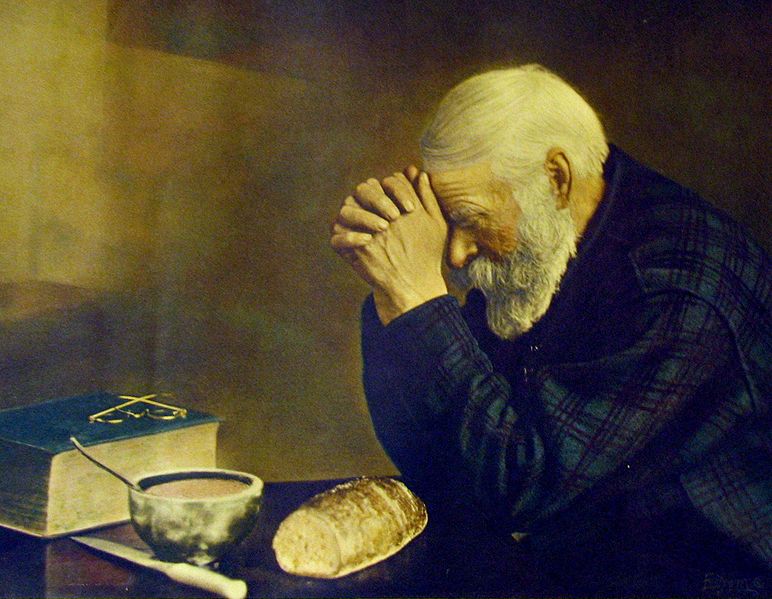
  • Language: Table Grace and naming foods
  • Medicine: Making a substance special
  • The Therapies: The taking of drinks for the enjoyment of them
  • Religious Studies: Eating alone: the contemplation of Heavenly Society.
  • Reaching for the Stars: Planting the seed and eating its produce

Chapter 14- Reaching for the Stars


Chapter 14


Reaching for the Stars


Dietary Exercise Suggested:

Planting the seed, and eating its produce

Commentary:

This chapter is about both beginnings and their eventualities, and the faith required between the two – and so it is only fitting that for the dietary exercise concluding here we have both a seed and a plant made known by us.

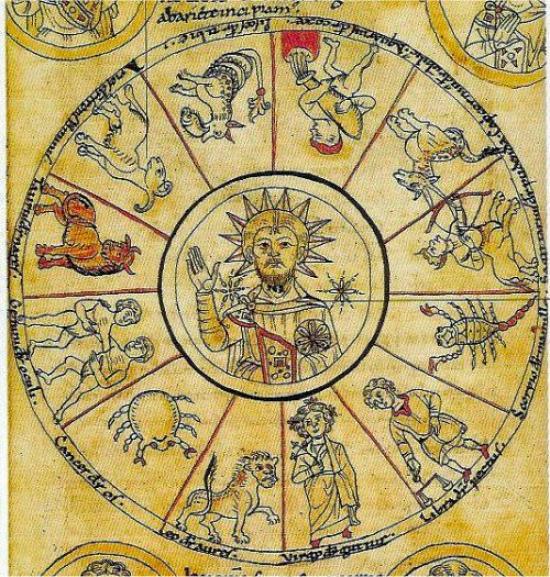
Although not previously stated, the texts given in this book have offered yet one more perspective upon the zodiacal tendencies as borne out within our esoteric starry natures. You can find (although in a different running order of course) profiles which you will recognise, talents and inclinations, alongside also the emphasis as is given to each within their elemental strengths and notations.

Astrology has long set about to infer from the heavenly bodies that which causal astronomy could not. One of the reasons it could do this was because of its audacity in presuming that it could and can be done. Added to this it is interesting to say, that the astronomers who blithely view the stellar activities generally react with horror at the concept of their being an esoteric implication to their ‘science’ … whilst the configurations of the astrologer are no less accurate in their tracking, yet embellished with an understanding which speaks more about significance than it does of matter.


This is a controversial argument and in one sense borders upon the absurd. However, from the point of view of the spiritual seeker, it is most relevant for we have two main concerns:


  1. That further knowledge and esoteric insight cannot be gained without a measure of bridging faith. That many futures will not be brought into consequence if we do not enact upon an impassioned commitment to an outcome that cannot be proven until it eventuates. (This being both the nature of the Futures and of Christ in His Action here also.)
  2. That our founding concepts may indeed be incorrect, that our bearings be so misplaced initially and our main priori be dislocated from such truths as are redeemingly pertinent, that the true outcome is not perceived by us and is therefore fraught with consequent danger.


In other words, it is essential that we are given some kind of correct guidance from the outset as to how a particular seed should be planted, that it will hopefully sprout and go on to realise a productful maturity. And also, the discrimination to recognise this advice in its validity. We are required therefore to have in this process:


  • a seed
  • a conviction that this planting will effect an outcome
  • a hope that the outcome will be good
  • a projected picture concept of what that outcome might be
  • a desire for the outcome itself
  • the correct additives (sun, soil, water)
  • the correct advice
  • the correct conditions
  • the correct determining karma (perhaps and depending)
  • cooperation (from the seed and its kingdom)
  • attendance (follow-up duties after the initial planting)
  • The Holy Trinine (Our Father’s approval, Our Beloved Christ’s Signature & the Holy Spirit’s Life)


As fundamental as this may sound, it is nonetheless just as practical a guide, when pursuing those learnings which are profoundly so unknowable in their totality, yet spiritually palpable in semi-entirety!
What it does not offer however, is a plan given for an outcome which cannot be known, because it is so new, it has not yet happened. These outcomes can only begin in our envisionings, our hopes, our creativity, our whisperings from the spiritual hierarchical architects, and from our greatest and deepest of loves.


Thursday, January 11, 2018

Religious Studies: Weaknesses Transformed into Strengths

Characteristic Weaknesses Transformed into Strengths: 

Virtues are natural to Man, and when desired, when called upon, when prayed for sincerely, deliberately and needfully induced, their messengers will beckon and their characteristics shall be grafted to our being. The weakness shall be restored into that which it was originally destined to become, as follows:

Bitterness comes from the retaining of falsehoods. Although a genuine sadness may belie a harrowing upset, it is often perpetuated within an individual long after the event by resentments which are unempathetic and exaggerated.

You see, in truth it is not of Man to injure or to cause harm. It is never of Man because it is not of Christ. When events occur that cause pain and hardship they are instigated from the lower realms and criminal only to the condition of ego presently as is – weak and susceptible.


Individuals who come to truth, who embrace both understanding and knowing, inevitably come to Love. In this we can say (and at peace) to those who cause harm, that they know not what they do and therefore we can forgive.

Bitterness, therefore when redeemed, can become this flower of forgiveness which embraces the noble and endearing qualities of those around us, relinquishing the persistent cries for ungivable solace, finding true perspective, even amongst the hardships known.

The enjoyment of disasters and ruin of others is wilfully and intentionally malicious. It still comes under the category of not knowing what one does in respect to the idiotic karmic repercussions which concur because of this ruinistic conjecture.


One could imagine that this trait would tranverse into its opposite – that one could develop some helpful forethought and consideration thereby. This is not the case. What it does eventually become in time is: karmic suffering, followed by bitterness, followed by the resolution found (as above) in forgiveness.

This of course means also the forgiveness of oneself for the ill-will as shown to the others around them as well.

The true Captain of Religion sails the seas with an infinite and commanding calm. He knows the motion of the waters beneath him yet loves the land also, and knows how to walk it. Through the Heavenly Bodies He becomes in the World and through his being in the World he gives to the World and all is well.


Chapter 13- Religious Studies: Exercise 2


Exercise 2

The Throwing of Candles 

Tools required:
  • Small candles
  • Open and safe space
  • Light the candle and throw it
It is expected for it to go out during the throw.
Take care not to set anything alight.


Saturday, December 30, 2017

Chapter 13- Religious Studies: Exercise 1


Exercise 1 

The Clearing of the Untruths

Tools required:

  • Mantric petition
  • Bowl of water (clear water, not muddy lake water, and definitely not seawater)
  • Candle
  • Pen and paper 

Mantric petition:
Beloved Christ, Keeper of true testimony:
I ask for the clearing away of all burdensome falsehoods
which are set upon me.
That I may efficiently recognize my own corruptions
and be freed from them.
And now, in this moment, may my greatest hindrance
be so shown to me, to then be dispelled by Your Loving Power:


I ask: that this falsehood of consequence become apparent to me:

REVEAL!
 I ask: that this falsehood of consequence become relinquished of me:
 ABSOLVE!
 I ask: that this falsehood of consequence become distinct from me:
 RELEASE!

 I ask: that this falsehood of consequence be now, and forever:
 RESOLVED!


Have the candle placed in the bowl of water, so that it is steadily balanced there, in the centre (perhaps in a holder) with the top sticking out above.
Light the candle.

Passing your egoic hand (whichever is the dominant hand) over the tip of the flame (without burning it) repeat the mantra solemnly. Continue to do so until an image comes to mind.

Do not dismiss this image, but write briefly on a small piece of paper what it is you have witnessed.

Question yourself deeply as to what may be the calamity here … what is the discrepancy between what you take for being true and what is not true about this idea or memory?


If you cannot recognize the mistake there to be corrected, fold the piece of paper and carry it with you for a week – taking time to explore the meaning of this message.

Conversely, if the meaning does make itself apparent in the moment, take the paper and fold it tightly, then carefully set fire to it from the candle and finish the procedure by immersing it within the water of the bowl.

If during the week the answer becomes clear, go to the bowl and proceed as just described (repeating the mantra as given).

If during the week no answer becomes known, take counsel outside of yourself and ask the opinion of others whose angelic guides may answer you more clearly. Take notice of all comments weighing with importance, and if still after the second week no clear answer has come, make an entry in a diary of experience for future consideration.

Do not hurry into false assumptions but remember that this is a process for one’s own clarity first and foremostly. Often folk do find solace in certain repentance which may come of this. However the objective is not to cringe or cower at the enormity some falsehoods presume over us with, not to feed them any more vitality than is already so issued, but to dissolve the partnership and be done so.

Friday, December 08, 2017

Chapter 13- Religious Studies: Recommended, Part 2


The tending to bonfires and barbecues is a stimulant for the inspiration – whilst also, if there are others present, a wonderful community, communitive inspirationally as well!

The staff barbecue at the place of employment; the festival bonfire; the ‘say-goodbye-to-the-old’ burn-off; the kiln-pit firing; even the ol’ spit-roast … brings inspiration to the party attending, and inspires the group as a whole.

If you watch people who are gathered around a fire you will see that the emphasis is that of the folk being relieved from eye contact with one another. A lot of the time it is acceptable for the gaze to go to the flames and relax there, taking too the thought, and the time for thought.

Conversation is less hurried and the mood is more pensive. We are drawn to take in the aspects of the fire, as it takes to itself much and expires it rapidly.


Fires are a lovely way help us find the quiet connections that we have and maintain them. The tending of them is a great and responsible service.

Dedicated art incorporates, with adhesiveness, the spiritual worlds and their devotion into our physical habitat. We can learn to creatively, distinctively and consciously be artful in much that we do.

For example: if we are delivering a prayer or communion amongst others, or in simple dialogue which is inspired, we can embellish that which we do which ordinarily otherwise could be perfunctory routine to us. The embellishment need not be of ‘bad taste’, but rather something which is creatively added to and made wonderful by us in the very attempt to do so.

Folk instinctively respond to creativity with much delight. It proves firstly the curious nature we hold about us, the quirk and the quark, so to speak. Secondly, creativity is so revered and respected by the angelic humors, as this is not a talent that they are given to of themselves, but can appreciate much through the unpredictability of humankind.

Becoming artful is another way of becoming thoughtful. The sinister connotation this word has been given to indicates some kind of cunning or guile … whereas in its proper propriety it represents someone who is creatively and consciously (skilfully too) working to enhance the mundane with their imaginative talents.

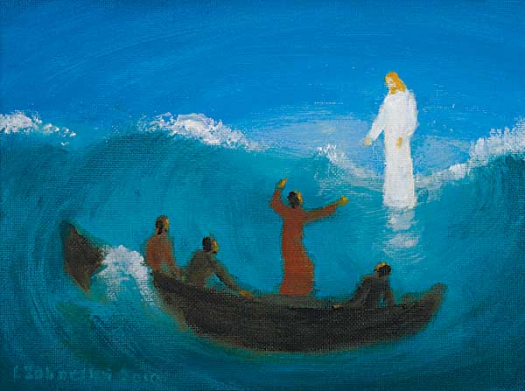
Walking on water (in both the spiritual and physical context) is a condition whereby our relationship with the Divine Ego is supported and made buoyant, rather than drowned or held down, in the deep.

This is important and vital ideology to the Christian soul who seeks the egoic stronghood as is promised to him. Prior to this outer and inner example as was made clear by our beloved Christ, it was a presumed and given tenet that development meant subjugation to the seas of eternal splendour. We were all led to believe that Father God Himself was uncompromising, and that our own parts of egoic rapture were to be confiscated for the sake of the greater, all engulfing, cosmic whirlpools of a ‘higher consciousness’.

However, it is Christ that taught us that we could dance upon the waters. The uncanny truth to this is that whilst an individual is concealed from that understanding he may well be so contained and subservient to all kinds of ‘larger’ influences – which although of Father God may not necessarily be of Christ or pertinent to Man. Yet, wonderfully, when he has the revelation of his own strength within … and the right to be that strong … he cannot be held captive anymore. The freedom of spirit, of both ego and soul, is instantaneous!


Wednesday, December 06, 2017

Chapter 13- Religious Studies: Recommended


Activities Recommended:

  • Convalescence in Prayer
  • The wearing of blue garments
  • The tending to bonfires and barbeques
  • Dedicated art
  • Walking on Water

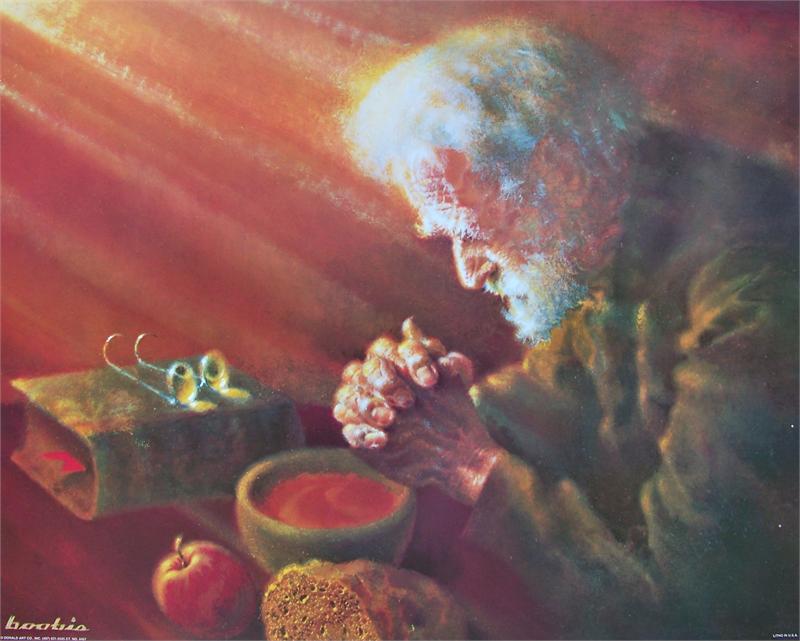
Convalescence in Prayer is a restorative like no other! For the irreligious it often comes to pass that the quickest and most effective turnaround for their entire conscious grappling with the divine, is through that one simple prayer, humbly and honestly coming back to Him.

Everyone has a right to pray. Praying does not lift us up and away from this world, but rather draws the heavens closer to us … to also, in consequence, be drawn closer and deeper into the physical as well.

Praying silently offers us a sense of solemn privacy which is quite blessed. Folk often wonder as to how it would be should every individual be competently telepathic – stories depict the need for speech becoming obsolete – however, and importantly, we can consider this for just one moment … There is a time given to the quiet resolvings, and a time for active expression. We know cosmically that we have both Father God and Christ, His active emissary, His Divine Word making tangible a complexity of realms.

As people, our first thought as to our own private world of thought is wrought with relief that we are not so revealed so easily – that were others to read our minds before we had the time to prepare them for viewing we should be embarrassed at the intrusion, at the very least. But there is a bigger perspective than this convenience (the convenience of keeping our thoughts to ourselves until we see fit to disclose them) and that is the matter of Formulation and of Issue.

To begin with it can be cited that it is not unusual for very religious individuals to be beautifully spoken, in decided and deliberate speech. Conversely to this, when the element of religion is withdrawn from their makeover, or underdeveloped, the processes of formulating thought and working upon the considered talk given out, is wanting. These individuals often lack a sensitivity also, in relation to others’ impressions of them. The flow of speech is not contained or controlled, and they are unempathetic to the rhythms and needs of the other parties in the discussion.

Now, in relation to the greater aspects of this Formulating and of Issue there is a fundamental truth which says:

From the fountain I get water,
but from the ground I get mud.

It is necessary for us to raise our thoughts above the day-to-day, above the mundane, out from the worldly, separated enough that we may find a useful clarity both materially and spiritually. We do this in part with our simple and private thinking – we do this most wonderfully when we confer our reasonings with Father God.


The wearing of blue garments is most encouraging to the would-be religious! If you gazed at a room full of people and looked to their egos you should see a collection of dazzling blue skies – together forming the one ether of blue – the one sky.

Yet another fantastic conundrum! That amongst men who are ‘divided’ by their individualities, kept separate and distinct by the very nature of their beloved egos, they are also so beautifully conjoined in the one expanse of space, in the soft blue depths, lit from consciousness, divinity and soul. 

The wearing of the colour blue brings this into our understanding.


Wednesday, November 29, 2017

Chapter13- Religious Studies: Contraindicated, Part 2

The eating of blue-veined cheeses:

Monastic orders of the past were competent and celebrated cheese-makers. Their products were not only good for storage and taste, but had the added value of being “the stuff which was binded” – albeit from some remarkably questionable sources; alongside the prayers said during the setting!

However, the eating of blue-veined cheeses is particularly deleterious to the would-be religious, as it is representative to the being of a binded whole becoming infiltrated by an immigrant - and weakened thereby.

Social climbing is sociopathic. Class-consciousness is offensive to Christ. It is enthralling to see however that during the history of many great charities, within Religion, it has been the ‘higher’ classes which have rallied together, in ways that the lower could not hold the fervour for.


The desire to better oneself is admirable, yet the desire to be seen to be better than others is not. Social climbing is not confined to the wealthy or moderately wealthy. The poison begins in the lower classes who sadly dismiss the goodness within their own society – forsaking their humanity for a secondary sense of worth.

Once again we come to the theme of false-values opposing the forces which work ever within the religious, of true value. If our first reference is to Father God, then we cannot err - first counsel, first source of wisdom. Many folk believe that it is a harmless interest reading such literature as is gossip from unreliable sources – often the trivial respect given to the subjects implies that it is also a trivial matter considering them. However, if we lack insight as to another person and refer to events or characteristics which are of themselves unqualifiable, we are injuring our own sense of future discernment in the process.


False judgements mar our ability to reason. They compound and accumulate – because an untruth simply will not go away until it has been seen for what it is. This is why people often repeat untruths over and over, again and again – because the untruths are presenting back to the consciousness, which is given a choice in that moment to either further them or correct them, depending.

So we may gather to ourselves many, many such adoptions, that are seeking correctness, hampering the consciousness with the call to be righted. (See: Exercise 1: The Clearing of the Untruths). Therefore it is prudent to be cautious as to what material and ideas we entertain from the outset, as to whether or not they are worthy of the burden they will put upon us should they be falsehoods without a substantial source to truly qualify them.

Chapter 13- Religious Studies: Contraindicated


Activities Contraindicated:

  • Profiteering from spiritual exploits
  • Profiteering from hope
  • Profiteering from alcohols or narcotics
  • The eating of blue-veined cheeses
  • Sociopathic social-climbing
  • The indulgence in tabloid gossip
 
Profiteering from Spiritual exploits can mean many things from commonplace fortune-telling to the sale of spiritual truth. There are many points to this calamity, as regards the ruination of useful talents and serious causes, attributable to a monied attachment, however today we are reviewing the concerns of the individual themselves rather than the consequences of their actions in this regard.

Inside the thinking of most folk there has to be a way of qualifying the value and worth of everything around them. This is usual to a developing discernment. We are constantly reviewing the price and cost of our involvements, and by doing so we are reasserting our choices and commitments within the world.

It is natural for a man to wish to qualify his life this way, yet for many the way of this qualification itself may come to supersede what was to be the end intention or prize originally sought for.

For example: I may count the number of heads in church to qualify whether or not the church is “reaching out” to people as I would hope. My prize might be that a certain salvation is won there for them … however, the number of heads really has nothing to do with one or more being salved! It may tell me of something to do with numbers of attendees, and I may qualify it in my mind as being relevant to salvation, when truly it is not.

The whole ‘counting’ thing is overrated! – as far as spiritual discerning goes a quantity of numbers can never relate to actuality in toto. Statistics are indicative only of themselves, and not of any real assumption in stead.

Truth is not worth more because people will pay for it, nor is it to be weighed by the dollar. The miser will never find the comfort he seeks by accumulating his wealth. Statistics refer only to the past, containing no essence or foreknowledge of the future.

Here we can enter in to the subject of selling hope and question its vagaries. One can offer or, at times, give hope, but once there is profiteering involved the grace which is Hope departs immediately. 

You can witness this quite readily. Watch a man or a woman who is about to buy a product which they are being told will help beautify or fructify them. There is an excitedness, whilst also an illumination about them. Then, even before using the product, even before taking the package home, watch and see that illuminated quality dissipate from the point of the very transaction.

The hope expires when the individual believes they can purchase the promise for a fee. The fee has no basis in reality in relation to healing or enhancement. The link is broken immediately. Sadly it is often the hope which would have proved a good catalyst for inspiring the change which was sought for. Materially a product might be effective, but spiritually it cannot be received when money becomes involved. In this manner we can realize that medicines and foods are best given and received without monetary exchange.

Commerce, as a healthy animal, could be a most beautiful and useful beast. Eventually Mankind will feed from the milk from this creature – when it has matured. At present, commerce itself does not have the qualities that will one day spiritually imbibe it. It stops and starts – it is fixed in pockets which cannot or do not disperse as needed – and although it is young in the making, it has the constitution currently of an elderly and failing corpse. The heart is weak, the veins collapsed, the fat hangs heavy and the face sags at the prospect of yet one more greedy man. The infant Commerce is struggling with existence – malnourished and benign.


When folk are alarmed at the conservation issues within the natural world, they are intuitively also comprehending the condition of Commerce today. Generally speaking, the world issues to do with tree falls, wars and racial destitution are resulting from commerce in its present state of sickness.
True values do materialize wonderfully when folk work to counter these problems as best as they can. Yet spiritually speaking we have a system which of its own cannot qualify our life as well as it might – and is letting the whole of the complex world down.

The difficulty from the individual’s perspective of trying to profiteer, comes in the association immediately made real between themselves and the creature Commerce. Although we have a divine being in the making, at this point the corruption bleeds into any activity for which it is called to or involved in.

Added to this, when an individual, or corporation, becomes involved in the profiteering from alcohol or narcotics there is a further scoring upon the poor body of commerce – for when it is ill-used its failing does worsen. Equally this can be said for purchases and sales to do with any number of things injurious to man, however the entities associated with the ego-inhibiting substances fiercely and deleteriously afflict the creature Commerce. You can witness economic frailty within a race, country or institution in relation to its profiteering (not consumption) from narcotics or alcohol.

Thursday, November 23, 2017

Chapter 13- Religious Studies: Prayer

Ladislav Záborský

A Prayer for His People

In all of my travels,
In times I've lived through,
In meetings and yearnings,
Through windows I’ve seen through … 
I recognise this:
That His Presence was there
In my beginnings, to now, I know He is here. 

Dearest Father God be with me,
May Your Breath and Life move through me,

May Your Word become within me,
And Your Love be proven in me, as in all.

 Amen

Chapter 13- Religious Studies: Poem


A Poem 

Our dear Mother Church, 
Who, yes, is always inherently
Rent yet at this time, 
We sense moreso … 
With birth-pains of the New Christianity.
We’ve tried but cannot be just of thee
And barely even in. 

For shepherds of another fold have we 
(Thanks Father God)
Who strive with heart-won strength of clarity
To show the esoteric path ahead
And remove your priests’ obscurities
Which have sadly hidden our Christ from view.

Yet these two folds will ultimately be one.
Until such time we will also call from within thy choir
To thy blessed saints and martyrs near
For this harmony is my love’s desire. 


Chapter 13- Religious Studies


Chapter 13

Religious Studies

Dietary Exercise Suggested:

Eating alone … and with the contemplation of the invisible Host.

Commentary:

Although the exercise for this subject could well have been consistent with the theme of communal dining, and the sharing of the one foodstuff etc. we have chosen an aspect which hopes to embrace the invisible community, Religiosity Major, and the inspirational company therein as it becomes qualified in us.

What is perhaps not so easily reckoned with within the tangible world, is that there are many spiritual beings and departed individuals who glean experience from that of our own.

The experience itself does not (could not and should not) translate into a direct perception – i.e. seeing through our eyes, hearing through our ears, sensing as we sense – but it does commute via the impressionings gleaned in our summation of them.

What ‘speaks’ of us, and follows on to the invisible worlds is not that of what we ordinarily experience; partly because there are no means there for them to interpret physical sensations anyway. What speaks to them is that which is born of us through a secondary consideration – usually one of inspiration, curiosity or just plain out and out wonder!


There is a budhi aspect which Humanity is awakened to through its religiosity. With the animal this aspect presents itself within the relationship of parent to young, and then further on with pride or herd. A like sympathy will develop to the point that the animals do feel and intuit on behalf of one another. Not only can they physically sense each other’s emotional life – feeling their fear, exploring their aggression, romping into playfulness, or driving into fiercely determined peregrinations – the animals know the collective mood, and are affected by it greatly.

With men and women there is also the family as well, quite naturally, but adherent to this comes the greater family of the world to be known and understood. For in terms of our own spiritual natures, our state of religion can be verily measured by the sense of our own humanity. And interestingly enough this requires a talent and a tolerance which takes us out of our secular groupings and provings into a lifelong compassion which pledges for the human spirit itself – in all of its nakedness and innocence.

You see, we identify and choose many associates from differing quarters. With most of these folk we will be obliged to be respectful to who they are and what they defend. Yet, these choosings will always be defined by us – meeting the individuals or the groups in relation, and with status which is of the world.

In other words, I can know a fellow stamp-lover through our shared and acquired knowledge for philately, and our communicative understandings will be on a certain level respective to each other’s understandings.

Now, distinct to that form of fellowship is quite another. There is a fellowship we may come to Humanity by, and concurrently to our brothers and sisters also individually, through our relationship which is not by them or with them directly or respectively, but rather through our relationship with Father God. This is the difference between groupism, sameism, narcissism and Religion.

Religion takes us to the perception of Father God, that we may love, know and trust through His Eyes, as He does, with the Humanity around us. Our interpretive vistas are no longer restricted to that only of our own experience. Conversely also, the invisible community around us which supports His Kingdom’s Being is likewise affected by our gleanings as well.


During our exercise of eating alone we can further this thought with the ponderings of lofty and inspired contemplations, whilst nourishing ourselves. A favourite book or meditation – something which does not require great intellectual scrutiny (mind over stomach); but rather some literature or contemplation which is harmonising and relaxing to our beings.

The benefits from this practice should be considerable in themselves. This is not an attempt to realize or compare in abstract terms what we are doing, but a time we can take in simplicity for ourselves – soothing and feeding ourselves, with an inspiration along the way, making holy the nourishment which becomes new life within us.

Tuesday, November 14, 2017

The Therapies: Weaknesses Transformed into Strengths

Characteristic Weaknesses Transformed into Strengths:

Virtues are natural to Man, and when desired, when called upon, when prayed for sincerely, deliberately and needfully induced, their messengers will beckon, and their characteristics shall be grafted to our being. The weakness shall be restored into that which it was originally destined to become, as follows: 

A fixation on death processes is primal to the pessimistic personality. At the core of the imaginations and subsequent perceptions the problem speaks of the soul in relation to a decaying world. It also speaks of finality of episodic endurance, as opposed to the endurance and continuum connecting the episodes perceived.

When a man has suffered from this fixation and has overcome it well, he is attributed to a great cyclic understanding. His perception becomes endowed with a comprehension of physics and numerative law, whilst also a sense of purpose for which all cycles are given to.

Bearing ill-will towards humanity is a sickness just as any observable physical frailty. Not only does it cause illness within the individual as a result, it can also be endemic to a condition usually brought on by narcotics, blood-poisons or spiritual exercises which have caused an organic displacement.


The reason for this is that an individual’s physical and astral interpretative comprehensions can be damaged in such a way that the individual has not the usual protections given to him from impinging influences outside of himself. It may not even be that he could be classed as ‘over-sensitive’ in an empathetic or specific way, but moreover just sensitive in general – and painfully so. As a result of this most everyone around them - and also the invisibles - become a constant aggravant experienced by them. The ill-will felt grumbles away as something of a moaning protest against this uncomfortable hardship known.

Coming to the Therapies and adopting their enlightened reasonings will provide for corrections within the physical and astral leakages as described. For the individual who has experienced this suffering, when the weakness has been transcribed, it becomes one of Prudence – whereupon the individual does not try to hurry into experience prematurely, nor unguardedly.

With respect to those who attempt to manipulate others, or require that they are the leader, there is a presumption of mistrust and pessimism placed upon all folk in general. This presumption assumes perhaps a caring attitude, but is misguided because it denies the freedoms which in truth are in place, regardless of their directings – at any time, ever.

Such wilfulness can become exaggerated where any or all behavior of themselves is excused by the individual who tries to manipulate and force others to do their will. Within himself he or she knows that it is indeed their own behavior which cannot be trusted and during their own excusing there becomes a heightened and animated accusing to follow!
These tendencies are eventually overcome by their own default, and when this is achieved the transgressions give way to great humour within the soul.

For when the will of another has been encountered, yet not known how to be with, the humour uplifts the fellow out from his accusiveness in a happy and warm response of humble perplexity.

The Therapist dances with Life in graceful compromise. They are both charming and charmed; pertinent, yet patient, encouraging, yet with the discipline and compassion that withholds their own will from that which they seek to coax into fruition. 


Chapter 12- The Therapies, Exercise 3


Exercise 3 

Becoming aware of Criticisms 

Tools required:
   
  • Observation

This is a weekly exercise in which we become aware of the criticisms offered by ourselves and by others and respond to them with the addition of saying something incredibly pleasant. 

This can be done with humour, a sense of the fantastic and be disproportionate to the concern … responding with a tangible, palpable, surge of happy insight. It need not have anything whatsoever to do with the subject at hand. Quoting cheerful scripture, reciting exciting poetry or thoughtful, inspired conjectures … these and other zealous pronouncements can be regarded as ‘invited’ by each and every criticism encountered. 

The results can be observed.