Translate

Saturday, December 30, 2017

Chapter 13- Religious Studies: Exercise 1


Exercise 1 

The Clearing of the Untruths

Tools required:

  • Mantric petition
  • Bowl of water (clear water, not muddy lake water, and definitely not seawater)
  • Candle
  • Pen and paper 

Mantric petition:
Beloved Christ, Keeper of true testimony:
I ask for the clearing away of all burdensome falsehoods
which are set upon me.
That I may efficiently recognize my own corruptions
and be freed from them.
And now, in this moment, may my greatest hindrance
be so shown to me, to then be dispelled by Your Loving Power:


I ask: that this falsehood of consequence become apparent to me:

REVEAL!
 I ask: that this falsehood of consequence become relinquished of me:
 ABSOLVE!
 I ask: that this falsehood of consequence become distinct from me:
 RELEASE!

 I ask: that this falsehood of consequence be now, and forever:
 RESOLVED!


Have the candle placed in the bowl of water, so that it is steadily balanced there, in the centre (perhaps in a holder) with the top sticking out above.
Light the candle.

Passing your egoic hand (whichever is the dominant hand) over the tip of the flame (without burning it) repeat the mantra solemnly. Continue to do so until an image comes to mind.

Do not dismiss this image, but write briefly on a small piece of paper what it is you have witnessed.

Question yourself deeply as to what may be the calamity here … what is the discrepancy between what you take for being true and what is not true about this idea or memory?


If you cannot recognize the mistake there to be corrected, fold the piece of paper and carry it with you for a week – taking time to explore the meaning of this message.

Conversely, if the meaning does make itself apparent in the moment, take the paper and fold it tightly, then carefully set fire to it from the candle and finish the procedure by immersing it within the water of the bowl.

If during the week the answer becomes clear, go to the bowl and proceed as just described (repeating the mantra as given).

If during the week no answer becomes known, take counsel outside of yourself and ask the opinion of others whose angelic guides may answer you more clearly. Take notice of all comments weighing with importance, and if still after the second week no clear answer has come, make an entry in a diary of experience for future consideration.

Do not hurry into false assumptions but remember that this is a process for one’s own clarity first and foremostly. Often folk do find solace in certain repentance which may come of this. However the objective is not to cringe or cower at the enormity some falsehoods presume over us with, not to feed them any more vitality than is already so issued, but to dissolve the partnership and be done so.

Friday, December 08, 2017

Chapter 13- Religious Studies: Recommended, Part 2


The tending to bonfires and barbecues is a stimulant for the inspiration – whilst also, if there are others present, a wonderful community, communitive inspirationally as well!

The staff barbecue at the place of employment; the festival bonfire; the ‘say-goodbye-to-the-old’ burn-off; the kiln-pit firing; even the ol’ spit-roast … brings inspiration to the party attending, and inspires the group as a whole.

If you watch people who are gathered around a fire you will see that the emphasis is that of the folk being relieved from eye contact with one another. A lot of the time it is acceptable for the gaze to go to the flames and relax there, taking too the thought, and the time for thought.

Conversation is less hurried and the mood is more pensive. We are drawn to take in the aspects of the fire, as it takes to itself much and expires it rapidly.


Fires are a lovely way help us find the quiet connections that we have and maintain them. The tending of them is a great and responsible service.

Dedicated art incorporates, with adhesiveness, the spiritual worlds and their devotion into our physical habitat. We can learn to creatively, distinctively and consciously be artful in much that we do.

For example: if we are delivering a prayer or communion amongst others, or in simple dialogue which is inspired, we can embellish that which we do which ordinarily otherwise could be perfunctory routine to us. The embellishment need not be of ‘bad taste’, but rather something which is creatively added to and made wonderful by us in the very attempt to do so.

Folk instinctively respond to creativity with much delight. It proves firstly the curious nature we hold about us, the quirk and the quark, so to speak. Secondly, creativity is so revered and respected by the angelic humors, as this is not a talent that they are given to of themselves, but can appreciate much through the unpredictability of humankind.

Becoming artful is another way of becoming thoughtful. The sinister connotation this word has been given to indicates some kind of cunning or guile … whereas in its proper propriety it represents someone who is creatively and consciously (skilfully too) working to enhance the mundane with their imaginative talents.

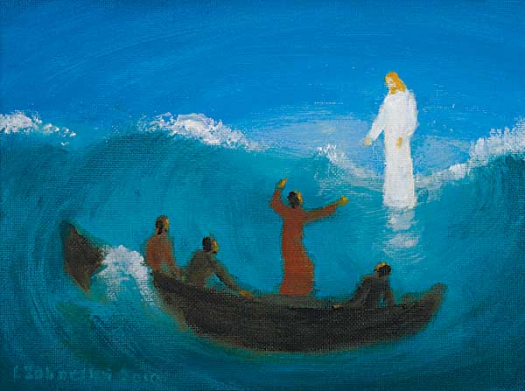
Walking on water (in both the spiritual and physical context) is a condition whereby our relationship with the Divine Ego is supported and made buoyant, rather than drowned or held down, in the deep.

This is important and vital ideology to the Christian soul who seeks the egoic stronghood as is promised to him. Prior to this outer and inner example as was made clear by our beloved Christ, it was a presumed and given tenet that development meant subjugation to the seas of eternal splendour. We were all led to believe that Father God Himself was uncompromising, and that our own parts of egoic rapture were to be confiscated for the sake of the greater, all engulfing, cosmic whirlpools of a ‘higher consciousness’.

However, it is Christ that taught us that we could dance upon the waters. The uncanny truth to this is that whilst an individual is concealed from that understanding he may well be so contained and subservient to all kinds of ‘larger’ influences – which although of Father God may not necessarily be of Christ or pertinent to Man. Yet, wonderfully, when he has the revelation of his own strength within … and the right to be that strong … he cannot be held captive anymore. The freedom of spirit, of both ego and soul, is instantaneous!


Wednesday, December 06, 2017

Chapter 13- Religious Studies: Recommended


Activities Recommended:

  • Convalescence in Prayer
  • The wearing of blue garments
  • The tending to bonfires and barbeques
  • Dedicated art
  • Walking on Water

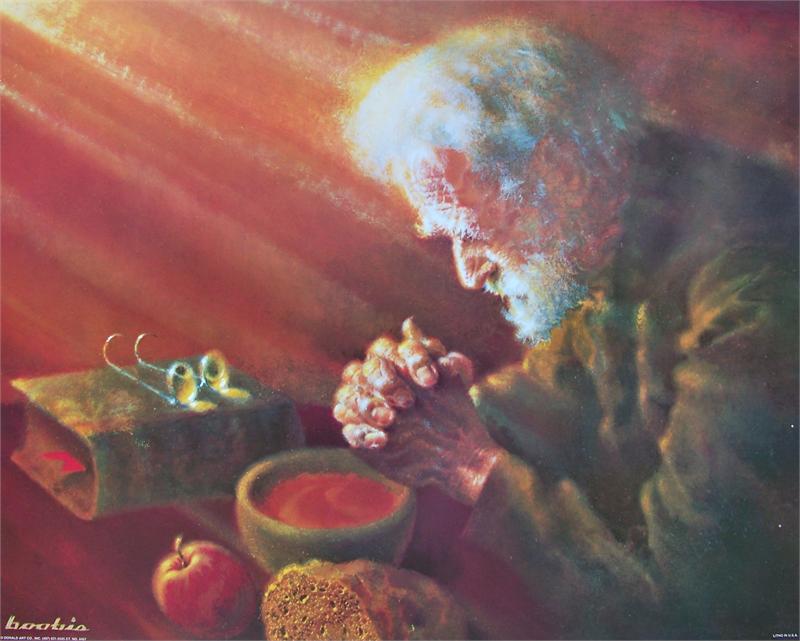
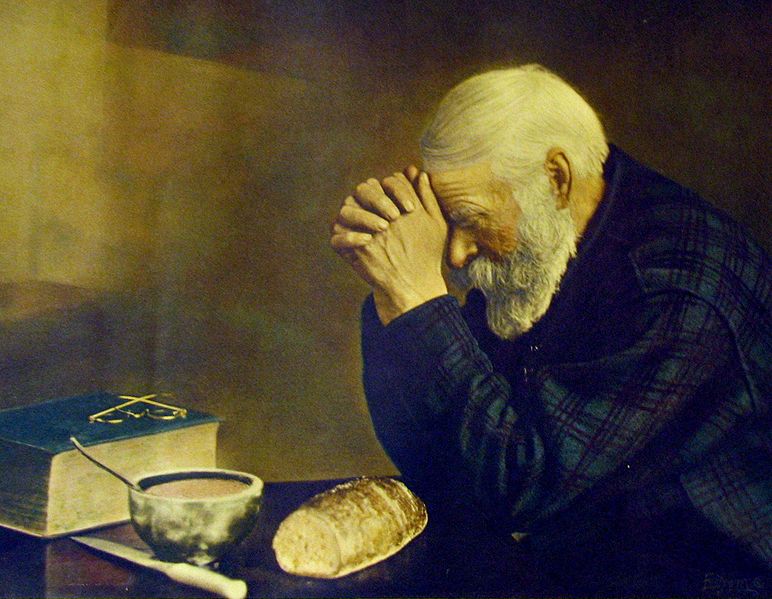
Convalescence in Prayer is a restorative like no other! For the irreligious it often comes to pass that the quickest and most effective turnaround for their entire conscious grappling with the divine, is through that one simple prayer, humbly and honestly coming back to Him.

Everyone has a right to pray. Praying does not lift us up and away from this world, but rather draws the heavens closer to us … to also, in consequence, be drawn closer and deeper into the physical as well.

Praying silently offers us a sense of solemn privacy which is quite blessed. Folk often wonder as to how it would be should every individual be competently telepathic – stories depict the need for speech becoming obsolete – however, and importantly, we can consider this for just one moment … There is a time given to the quiet resolvings, and a time for active expression. We know cosmically that we have both Father God and Christ, His active emissary, His Divine Word making tangible a complexity of realms.

As people, our first thought as to our own private world of thought is wrought with relief that we are not so revealed so easily – that were others to read our minds before we had the time to prepare them for viewing we should be embarrassed at the intrusion, at the very least. But there is a bigger perspective than this convenience (the convenience of keeping our thoughts to ourselves until we see fit to disclose them) and that is the matter of Formulation and of Issue.

To begin with it can be cited that it is not unusual for very religious individuals to be beautifully spoken, in decided and deliberate speech. Conversely to this, when the element of religion is withdrawn from their makeover, or underdeveloped, the processes of formulating thought and working upon the considered talk given out, is wanting. These individuals often lack a sensitivity also, in relation to others’ impressions of them. The flow of speech is not contained or controlled, and they are unempathetic to the rhythms and needs of the other parties in the discussion.

Now, in relation to the greater aspects of this Formulating and of Issue there is a fundamental truth which says:

From the fountain I get water,
but from the ground I get mud.

It is necessary for us to raise our thoughts above the day-to-day, above the mundane, out from the worldly, separated enough that we may find a useful clarity both materially and spiritually. We do this in part with our simple and private thinking – we do this most wonderfully when we confer our reasonings with Father God.


The wearing of blue garments is most encouraging to the would-be religious! If you gazed at a room full of people and looked to their egos you should see a collection of dazzling blue skies – together forming the one ether of blue – the one sky.

Yet another fantastic conundrum! That amongst men who are ‘divided’ by their individualities, kept separate and distinct by the very nature of their beloved egos, they are also so beautifully conjoined in the one expanse of space, in the soft blue depths, lit from consciousness, divinity and soul. 

The wearing of the colour blue brings this into our understanding.


Wednesday, November 29, 2017

Chapter13- Religious Studies: Contraindicated, Part 2

The eating of blue-veined cheeses:

Monastic orders of the past were competent and celebrated cheese-makers. Their products were not only good for storage and taste, but had the added value of being “the stuff which was binded” – albeit from some remarkably questionable sources; alongside the prayers said during the setting!

However, the eating of blue-veined cheeses is particularly deleterious to the would-be religious, as it is representative to the being of a binded whole becoming infiltrated by an immigrant - and weakened thereby.

Social climbing is sociopathic. Class-consciousness is offensive to Christ. It is enthralling to see however that during the history of many great charities, within Religion, it has been the ‘higher’ classes which have rallied together, in ways that the lower could not hold the fervour for.


The desire to better oneself is admirable, yet the desire to be seen to be better than others is not. Social climbing is not confined to the wealthy or moderately wealthy. The poison begins in the lower classes who sadly dismiss the goodness within their own society – forsaking their humanity for a secondary sense of worth.

Once again we come to the theme of false-values opposing the forces which work ever within the religious, of true value. If our first reference is to Father God, then we cannot err - first counsel, first source of wisdom. Many folk believe that it is a harmless interest reading such literature as is gossip from unreliable sources – often the trivial respect given to the subjects implies that it is also a trivial matter considering them. However, if we lack insight as to another person and refer to events or characteristics which are of themselves unqualifiable, we are injuring our own sense of future discernment in the process.


False judgements mar our ability to reason. They compound and accumulate – because an untruth simply will not go away until it has been seen for what it is. This is why people often repeat untruths over and over, again and again – because the untruths are presenting back to the consciousness, which is given a choice in that moment to either further them or correct them, depending.

So we may gather to ourselves many, many such adoptions, that are seeking correctness, hampering the consciousness with the call to be righted. (See: Exercise 1: The Clearing of the Untruths). Therefore it is prudent to be cautious as to what material and ideas we entertain from the outset, as to whether or not they are worthy of the burden they will put upon us should they be falsehoods without a substantial source to truly qualify them.

Chapter 13- Religious Studies: Contraindicated


Activities Contraindicated:

  • Profiteering from spiritual exploits
  • Profiteering from hope
  • Profiteering from alcohols or narcotics
  • The eating of blue-veined cheeses
  • Sociopathic social-climbing
  • The indulgence in tabloid gossip
 
Profiteering from Spiritual exploits can mean many things from commonplace fortune-telling to the sale of spiritual truth. There are many points to this calamity, as regards the ruination of useful talents and serious causes, attributable to a monied attachment, however today we are reviewing the concerns of the individual themselves rather than the consequences of their actions in this regard.

Inside the thinking of most folk there has to be a way of qualifying the value and worth of everything around them. This is usual to a developing discernment. We are constantly reviewing the price and cost of our involvements, and by doing so we are reasserting our choices and commitments within the world.

It is natural for a man to wish to qualify his life this way, yet for many the way of this qualification itself may come to supersede what was to be the end intention or prize originally sought for.

For example: I may count the number of heads in church to qualify whether or not the church is “reaching out” to people as I would hope. My prize might be that a certain salvation is won there for them … however, the number of heads really has nothing to do with one or more being salved! It may tell me of something to do with numbers of attendees, and I may qualify it in my mind as being relevant to salvation, when truly it is not.

The whole ‘counting’ thing is overrated! – as far as spiritual discerning goes a quantity of numbers can never relate to actuality in toto. Statistics are indicative only of themselves, and not of any real assumption in stead.

Truth is not worth more because people will pay for it, nor is it to be weighed by the dollar. The miser will never find the comfort he seeks by accumulating his wealth. Statistics refer only to the past, containing no essence or foreknowledge of the future.

Here we can enter in to the subject of selling hope and question its vagaries. One can offer or, at times, give hope, but once there is profiteering involved the grace which is Hope departs immediately. 

You can witness this quite readily. Watch a man or a woman who is about to buy a product which they are being told will help beautify or fructify them. There is an excitedness, whilst also an illumination about them. Then, even before using the product, even before taking the package home, watch and see that illuminated quality dissipate from the point of the very transaction.

The hope expires when the individual believes they can purchase the promise for a fee. The fee has no basis in reality in relation to healing or enhancement. The link is broken immediately. Sadly it is often the hope which would have proved a good catalyst for inspiring the change which was sought for. Materially a product might be effective, but spiritually it cannot be received when money becomes involved. In this manner we can realize that medicines and foods are best given and received without monetary exchange.

Commerce, as a healthy animal, could be a most beautiful and useful beast. Eventually Mankind will feed from the milk from this creature – when it has matured. At present, commerce itself does not have the qualities that will one day spiritually imbibe it. It stops and starts – it is fixed in pockets which cannot or do not disperse as needed – and although it is young in the making, it has the constitution currently of an elderly and failing corpse. The heart is weak, the veins collapsed, the fat hangs heavy and the face sags at the prospect of yet one more greedy man. The infant Commerce is struggling with existence – malnourished and benign.


When folk are alarmed at the conservation issues within the natural world, they are intuitively also comprehending the condition of Commerce today. Generally speaking, the world issues to do with tree falls, wars and racial destitution are resulting from commerce in its present state of sickness.
True values do materialize wonderfully when folk work to counter these problems as best as they can. Yet spiritually speaking we have a system which of its own cannot qualify our life as well as it might – and is letting the whole of the complex world down.

The difficulty from the individual’s perspective of trying to profiteer, comes in the association immediately made real between themselves and the creature Commerce. Although we have a divine being in the making, at this point the corruption bleeds into any activity for which it is called to or involved in.

Added to this, when an individual, or corporation, becomes involved in the profiteering from alcohol or narcotics there is a further scoring upon the poor body of commerce – for when it is ill-used its failing does worsen. Equally this can be said for purchases and sales to do with any number of things injurious to man, however the entities associated with the ego-inhibiting substances fiercely and deleteriously afflict the creature Commerce. You can witness economic frailty within a race, country or institution in relation to its profiteering (not consumption) from narcotics or alcohol.

Thursday, November 23, 2017

Chapter 13- Religious Studies: Prayer

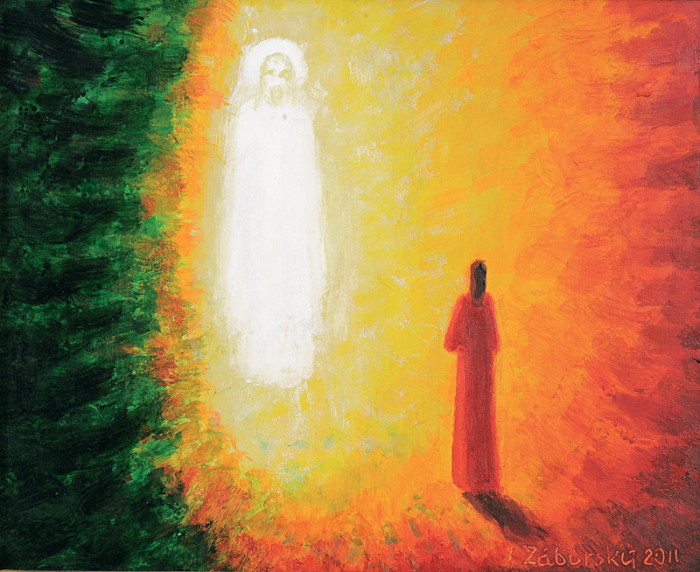
Ladislav Záborský

A Prayer for His People

In all of my travels,
In times I've lived through,
In meetings and yearnings,
Through windows I’ve seen through … 
I recognise this:
That His Presence was there
In my beginnings, to now, I know He is here. 

Dearest Father God be with me,
May Your Breath and Life move through me,

May Your Word become within me,
And Your Love be proven in me, as in all.

 Amen

Chapter 13- Religious Studies: Poem


A Poem 

Our dear Mother Church, 
Who, yes, is always inherently
Rent yet at this time, 
We sense moreso … 
With birth-pains of the New Christianity.
We’ve tried but cannot be just of thee
And barely even in. 

For shepherds of another fold have we 
(Thanks Father God)
Who strive with heart-won strength of clarity
To show the esoteric path ahead
And remove your priests’ obscurities
Which have sadly hidden our Christ from view.

Yet these two folds will ultimately be one.
Until such time we will also call from within thy choir
To thy blessed saints and martyrs near
For this harmony is my love’s desire. 


Chapter 13- Religious Studies


Chapter 13

Religious Studies

Dietary Exercise Suggested:

Eating alone … and with the contemplation of the invisible Host.

Commentary:

Although the exercise for this subject could well have been consistent with the theme of communal dining, and the sharing of the one foodstuff etc. we have chosen an aspect which hopes to embrace the invisible community, Religiosity Major, and the inspirational company therein as it becomes qualified in us.

What is perhaps not so easily reckoned with within the tangible world, is that there are many spiritual beings and departed individuals who glean experience from that of our own.

The experience itself does not (could not and should not) translate into a direct perception – i.e. seeing through our eyes, hearing through our ears, sensing as we sense – but it does commute via the impressionings gleaned in our summation of them.

What ‘speaks’ of us, and follows on to the invisible worlds is not that of what we ordinarily experience; partly because there are no means there for them to interpret physical sensations anyway. What speaks to them is that which is born of us through a secondary consideration – usually one of inspiration, curiosity or just plain out and out wonder!


There is a budhi aspect which Humanity is awakened to through its religiosity. With the animal this aspect presents itself within the relationship of parent to young, and then further on with pride or herd. A like sympathy will develop to the point that the animals do feel and intuit on behalf of one another. Not only can they physically sense each other’s emotional life – feeling their fear, exploring their aggression, romping into playfulness, or driving into fiercely determined peregrinations – the animals know the collective mood, and are affected by it greatly.

With men and women there is also the family as well, quite naturally, but adherent to this comes the greater family of the world to be known and understood. For in terms of our own spiritual natures, our state of religion can be verily measured by the sense of our own humanity. And interestingly enough this requires a talent and a tolerance which takes us out of our secular groupings and provings into a lifelong compassion which pledges for the human spirit itself – in all of its nakedness and innocence.

You see, we identify and choose many associates from differing quarters. With most of these folk we will be obliged to be respectful to who they are and what they defend. Yet, these choosings will always be defined by us – meeting the individuals or the groups in relation, and with status which is of the world.

In other words, I can know a fellow stamp-lover through our shared and acquired knowledge for philately, and our communicative understandings will be on a certain level respective to each other’s understandings.

Now, distinct to that form of fellowship is quite another. There is a fellowship we may come to Humanity by, and concurrently to our brothers and sisters also individually, through our relationship which is not by them or with them directly or respectively, but rather through our relationship with Father God. This is the difference between groupism, sameism, narcissism and Religion.

Religion takes us to the perception of Father God, that we may love, know and trust through His Eyes, as He does, with the Humanity around us. Our interpretive vistas are no longer restricted to that only of our own experience. Conversely also, the invisible community around us which supports His Kingdom’s Being is likewise affected by our gleanings as well.


During our exercise of eating alone we can further this thought with the ponderings of lofty and inspired contemplations, whilst nourishing ourselves. A favourite book or meditation – something which does not require great intellectual scrutiny (mind over stomach); but rather some literature or contemplation which is harmonising and relaxing to our beings.

The benefits from this practice should be considerable in themselves. This is not an attempt to realize or compare in abstract terms what we are doing, but a time we can take in simplicity for ourselves – soothing and feeding ourselves, with an inspiration along the way, making holy the nourishment which becomes new life within us.

Tuesday, November 14, 2017

The Therapies: Weaknesses Transformed into Strengths

Characteristic Weaknesses Transformed into Strengths:

Virtues are natural to Man, and when desired, when called upon, when prayed for sincerely, deliberately and needfully induced, their messengers will beckon, and their characteristics shall be grafted to our being. The weakness shall be restored into that which it was originally destined to become, as follows: 

A fixation on death processes is primal to the pessimistic personality. At the core of the imaginations and subsequent perceptions the problem speaks of the soul in relation to a decaying world. It also speaks of finality of episodic endurance, as opposed to the endurance and continuum connecting the episodes perceived.

When a man has suffered from this fixation and has overcome it well, he is attributed to a great cyclic understanding. His perception becomes endowed with a comprehension of physics and numerative law, whilst also a sense of purpose for which all cycles are given to.

Bearing ill-will towards humanity is a sickness just as any observable physical frailty. Not only does it cause illness within the individual as a result, it can also be endemic to a condition usually brought on by narcotics, blood-poisons or spiritual exercises which have caused an organic displacement.


The reason for this is that an individual’s physical and astral interpretative comprehensions can be damaged in such a way that the individual has not the usual protections given to him from impinging influences outside of himself. It may not even be that he could be classed as ‘over-sensitive’ in an empathetic or specific way, but moreover just sensitive in general – and painfully so. As a result of this most everyone around them - and also the invisibles - become a constant aggravant experienced by them. The ill-will felt grumbles away as something of a moaning protest against this uncomfortable hardship known.
Coming to the Therapies and adopting their enlightened reasonings will provide for corrections within the physical and astral leakages as described. For the individual who has experienced this suffering, when the weakness has been transcribed, it becomes one of Prudence – whereupon the individual does not try to hurry into experience prematurely, nor unguardedly.

With respect to those who attempt to manipulate others, or require that they are the leader, there is a presumption of mistrust and pessimism placed upon all folk in general. This presumption assumes perhaps a caring attitude, but is misguided because it denies the freedoms which in truth are in place, regardless of their directings – at any time, ever.

Such wilfulness can become exaggerated where any or all behavior of themselves is excused by the individual who tries to manipulate and force others to do their will. Within himself he or she knows that it is indeed their own behavior which cannot be trusted and during their own excusing there becomes a heightened and animated accusing to follow!
These tendencies are eventually overcome by their own default, and when this is achieved the transgressions give way to great humour within the soul.

For when the will of another has been encountered, yet not known how to be with, the humour uplifts the fellow out from his accusiveness in a happy and warm response of humble perplexity.

The Therapist dances with Life in graceful compromise. They are both charming and charmed; pertinent, yet patient, encouraging, yet with the discipline and compassion that withholds their own will from that which they seek to coax into fruition. 


Chapter 12- The Therapies, Exercise 3


Exercise 3 

Becoming aware of Criticisms 

Tools required:
   
  • Observation

This is a weekly exercise in which we become aware of the criticisms offered by ourselves and by others and respond to them with the addition of saying something incredibly pleasant. 

This can be done with humour, a sense of the fantastic and be disproportionate to the concern … responding with a tangible, palpable, surge of happy insight. It need not have anything whatsoever to do with the subject at hand. Quoting cheerful scripture, reciting exciting poetry or thoughtful, inspired conjectures … these and other zealous pronouncements can be regarded as ‘invited’ by each and every criticism encountered. 

The results can be observed.


Monday, November 13, 2017

Chapter 12- The Therapies: Exercise 2


Exercise 2 

Cartoon dialogues – cooperation

Tools required: 

  • Paper
  • Pen


Choose a friend and attempt to convey all of your conversation through drawings. Agree on a time beforehand for which no words will be used, and then begin!


Chapter 12- The Therapies: Exercise 1


Exercise 1 

Adopting a tree

Tools required:
  • Finding a special tree


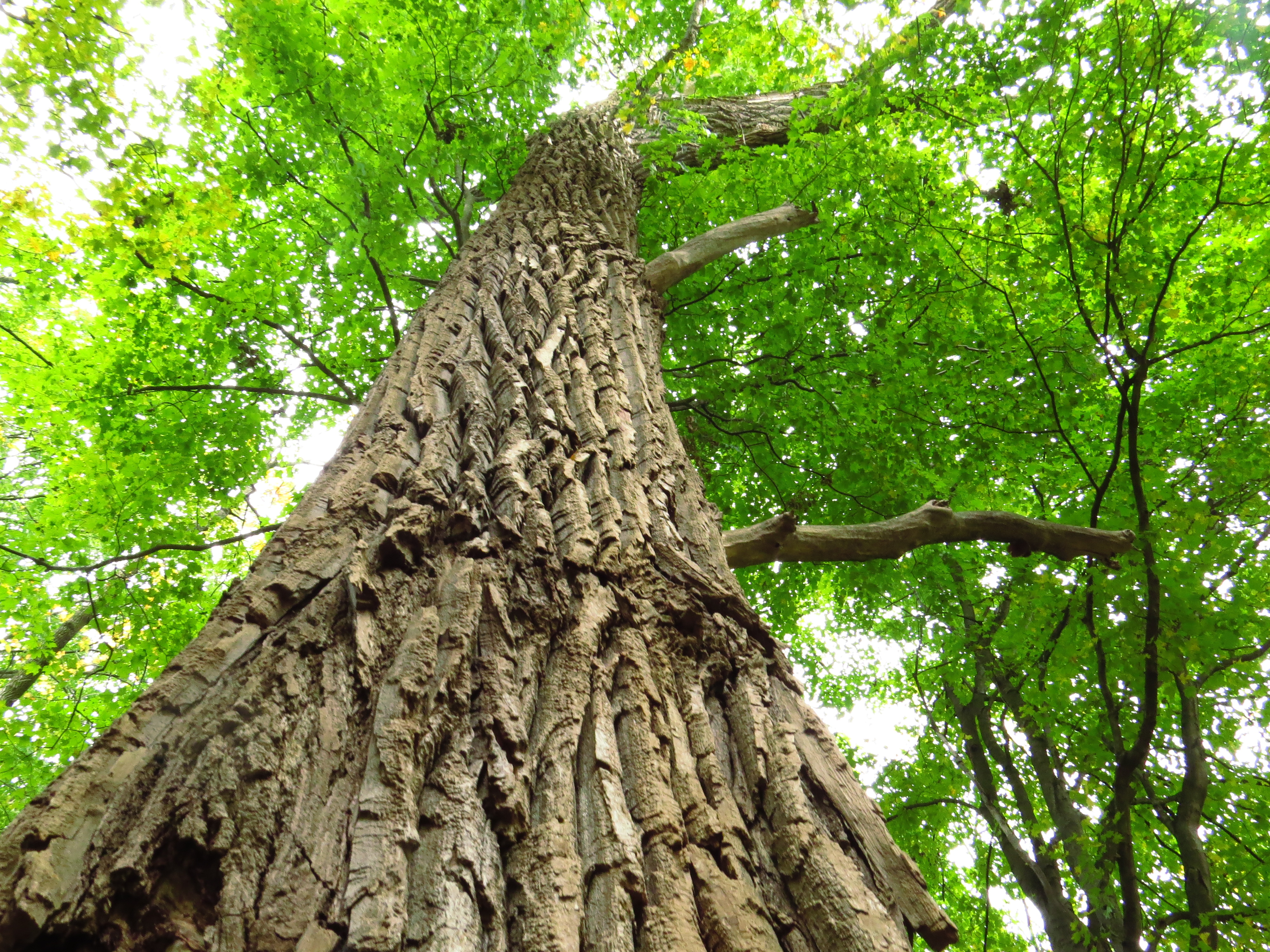
For this exercise we are to befriend a tree which hitherto has not had a special significance for us. This is to be a new tree to us, although preferably one which has been in the world for at least forty years or so.

When you have identified a tree that you should like to be your special tree, go to it on the first day and count the main boughs which stem from the trunk. 

Acknowledge the tree by exclaiming something complimentary to it.

Upon your second visit count the number of branches which stem from the boughs. Before leaving the tree, pronounce to it again, that which you think best describes your appreciation for its presence.

On the third visit you can count the leaves. This does not have to be the entire amount of leaves, but upon any given branch you can summarize. If there are no leaves you may count the twigs. Before you depart tell the tree of your admirations. You can sing them if you wish. If you have difficulty bringing some compliments to mind to voice ... it would be best if you went in search of another tree.


Wednesday, October 25, 2017

Chapter 12- The Therapies: Recommended, Part 2

The receiving of, and participation in the Eucharist: 

On the eve of that departing there were issues of merit to be lastly addressed and given answer to. There became a splendid assortment of moments in which our beloved Christ took one final pause before His Attention was thus driven into the calamity and depths of that death that was to follow. There was a very splendid time when He thought only of what was to prove best, that He could impart and make known, to help protect, to continue a living remembrance, and to welcome in further Life within His World. 

The ceremony of breaking the bread and drinking of the one cup was not newly given by Him; but that it was to be done for Him, was new. 

This ceremony done in His Name brings unto the gathered participants a very real connection with the community of folk who do likewise presently, and with those also who have done so before. There are means within the Eucharist which enable the cup before the celebrant to be of the one cup … the Graalus … the Holy Graalus. 


Spiritually, significantly, this grand chalice is that of the world. Can you picture our very Christ pouring into it? Can you feel the pores receiving? And, cosmically, as if viewing this globe from a distance … can you see this one glowing chalice as the souls make their peregrinations to and from the Heavens, drawn to it?

Every communion cup can bring our lips to the very Holy Grail so sought for – and does! Amongst this divine comedy of mysteries our most healing of therapies is there in that cup.

Adopting the gentle perspective is characterised by the ease which it promotes, whilst also the maturity for which it does prove. This is a significant passage amongst a chapter which decries ‘unripeness’ – for immaturity displayed within one’s temperament, thought or behaviour, is often too quick to act or to speak, too unripe in the judgement, too hurried for the proper course. This is, in a manner of speaking, problematic of unripeness.

The gentle perspective requires a little patience and a lot of ripening inner sun! That we may cure an idea within the warmth of our own being, that we may take time – even when seemingly no time affords. 

It is not an attitude of laziness, procrastination or ‘wait and see’ either; but what it is in its strength is an unprovokable sense of consideration where we can learn to go gently within the world and within ourselves – considerately. 

The viewing of the dawn can promote just such considerate patience. You cannot hurry the dawn yourself – it is obvious just what you have with an unripe dawn – you have but predawn gloom. If you hurry too much you can miss its occurrence in its most real sense – you can actually miss experiencing the arraignment of this paradise. The tension and anticipation, the melody, the mood, the airs … the expanding forthwith day.


For the unripe personality they will say “Oh, there will always be another dawn tomorrow I can see” … but for the mature they realise that not one is ever alike unto another. The unripe personality very rarely will catch this daily event. Yet the mature individual will take in many. The unripe individual will probably busy himself or chatter the moments away, whilst the mature nature might be held in great fulfilment within just a moment of a moment of its glory. 

We can actually work over our personalities during this morning episode for the better in this regard. The unripe individual who is determined to curb his immature aspects within his worldly and inner behaviors will benefit fantastically by learning to take in the morning’s awakening with peaceful and solemn consideration.


Chapter 12- The Therapies: Recommended

Activities Recommended: 

  • Self Appraisal (with Love)
  • The adornment of costume and/or jewellery
  • The receiving and participation of the Eucharist
  • Adopting the gentle perspective
  • The viewing of the dawn 
Self Appraisal along with praising the self is not only encouraging, but also self-determining. To qualify oneself cheerfully, to evaluate oneself optimistically, encourages also the angelic help which is all around us. The opinion we hold about ourselves does actually become reflected and experienced in the beings of those closest to us, who in turn see much of themselves incarnate in us.

For the angelic helpers often find themselves quite inseparable to us when it comes to a working consciousness. Their powers of affinity quickly begin this co-existent nature, and impels them to seek out identity amongst those of our own.

Devic spirits often mimic the folk around them, whilst the higher and more organized angeloi are transparently impressionable at times.

And so we can be mindful of this when we come to view even the lesser aspects of ourselves – not to forsake prudence of course – but however harsh we may be, may we be kindly.


If you are dissatisfied with yourself, you can still conduct both the assessment and the attempts at change, in a happy fashion. For to do this will be of the greater assistance, than for the dejected who dismiss their invisible helpers by the very attitude which promoted the complaint in the first place.
The adornment of costume and/or jewellery, the wearing of decorative hats, or any other accessories worn for beauty or fun brings us to that part of the nature expressed which is essentially playful, whilst at the same time attempting self-improvement.

Uniforms can be as sinister as they can be remoralising. When an individual chooses his adornment he becomes enhanced spiritually in the very way he imagines himself to be when he has first placed the article upon him. The very ‘glamour’ or statement that is assumed at the time of the choosing and the placing is that which emanates and radiates out from him (or her) in the surrounding ethers.

This becomes a personal creativity, which again will assist the overall spiritual psyche, whilst also give out a very real impression of how one wishes to be known by.

We can query the bed-dress as is given to the hospital patient. Some might argue that to strip them from familiar clothes and jewellery eases the patient from the concerns of the world, and even of beingness – and can be more restful because of it. Yet, if it is a positive recovery back into the world that we should mainly desire for them, it would be provocative to encourage their expression of themselves in the wearing of articles that best suit them and their hopes and ideas of who they should like to be and become.

Chapter 12- The Therapies: Contraindicated


Activities Contraindicated:
  • Bearing false witness
  • Entertaining the pessimisms: Gloomus & Doomus
  • The eating of Artichokes
  • The eating of unripe fruit
  • Charcoal drawing

To bear false witness can, in actuality, have many applications. In relation to the Therapies it is a condition in which our observations are somewhat deluded; as are assumptions that follow, which become equally as misplaced in relation to what we truly know. 

Firstly we can honestly declare that experiences interpreted by ourselves are subjective, regardless of our attempts at fairmindedness. Even those who are lacking in imagination still see through the eyes of related experience. Our interpretations will be our interpretations, and therefore ‘delusion’ will always be arguable as far as that goes.
Yet what is not arguable or contestable by others exists within our own inner-speak – those things to which we truly subscribe to or know; and that part of us which is the ‘me’ amongst the ‘I’ and within the ‘we’.

Candidness is always preferable to compromise, when it comes to the dialogue of the self and in meeting the demands of others. Essentially we are but one person, and when we are inconsistent within our own consciousness the fragmentation becomes destructive and illness will surely follow. 

To negate or dismiss our innermost knowings and preferences negates also the rights and privileges of others as well. Whilst this may appear quite simple, and commonly said, it becomes a constant review in the life of the initiate when he must simultaneously weigh his own heart alongside the wishes of the world.

However, to compromise ourselves is to bear false witness to ourselves, because at the most fundamental level it comes from questioning our own self-worth and integrity, demeaning it by going against what is known to be correct and true (for yourself). 

When as children a strong-willed bully has goaded the group into snickering, meanness or even brutality, those children who weakly complied knew simultaneously that their own inner nature was becoming scored by this compromise, that in the very participation of something for which was not their own natural inclination, yet of another’s perhaps, they were bearing false witness upon themselves – turning upon themselves in that moment, as if to accuse that goodliness of being too timid, for example.

Much evility within the human nature is fostered by precisely such a process. Here in the Therapies we are studying the ‘coaxing’ of good influences, and in this portion we can take time also to consider the ‘goading’ which occurs amongst the more negative aspects impinging upon ourselves.

It is tricky to say the least. It can happen in the best of individuals. Quite often there is a goodness appealed to in this occurrence when men are made to feel less than they should be and thus begin to turn against themselves – to betray themselves – believing this to be an honorable path to improvement. 

NEVER desist from who you are. Never give way to a lesser opinion of your own goodness and correctness. NEVER falter into betrayal of one’s own selfhood. 

The negation of self is the greatest of sufferings to our Christ. When we bear false witness upon ourselves, we afflict Him in this also.

Therefore we recommend that a philosophy or learning which promotes self-development should only be adopted if it proceeds with kindness and respect for the student firstly. And, concurrently, a philosophy of therapy should likewise treasure such consideration. We do not know or even presume to know, for another. 

The assumption of Original Sin bore false witness upon all of Mankind, placing individuals into that intangible position of apology, denigrating the true worth and measure of our Lord’s Grace as it is active within this World in fact. Enter: Gloomus and Doomus! 

For what is pessimism if it is not firstly self-doubt? And, (and this is the really interesting part) both Lucifer and Satan thrive on it! (Gloomus – appropriate title to the ‘light-bearer’, Doomus – describes the predictability of Ahriman most adequately!) 


The eating of artichokes is contraindicated in relation to the Therapies as they are an unripe bud. When the maturation of a food has been halted we respond in likeness to that condition. The life which was to have been coaxed from the bud has been interrupted prematurely. This is contrary to the therapeutic reasonings.

Similarly the eating of unripe fruit suggests to our own organism of a certain defeat. The body will react by trying to evacuate the material as quickly as possible, and at times there will be tensions felt – either within the psyche itself, or it will be displayed in muscular spasm.

There are very definite expressions within physical development by which we are all marking time and working through to.


When a child consumes unripe fruit he shall similarly begin to hold back forces seeking developmental expression within him and can begin to fail his incarnating process. In an adult the development may have reached its maturation, however the daily commitment to reincarnate can become interrupted as well. 

All foods can be viewed as medicinal in relation to their action upon us. There becomes an added difficulty when one realises that that which is unripe may have an opposite effect upon the constitution to that which has ordinarily realised its own nature and seen through its expression to become fully developed through the advantages of the sunlight and the water that is required. 

Charcoal drawing endeavors to combine an artistic experience with a dried, soulless, dead remnant. Whilst this could be said for the very paper also that we draw on, there are substances within the charcoal which are no longer representative of the former tree to which the matter belonged to. With paper we can trace its organic origins and find within its influence much of the forest from which it has come. In paper the parent qualities remain. And yet, with charcoal we are attempting to encapsulate a lively imagination through a corrupted vehicle testifying to death.